



🔥 Warmth and ventilation in Finland: how radiators, underfloor heating, and “smart” buildings actually work
If you’re staying in a hotel, Airbnb, or a cottage in Finland and catch yourself thinking, “the room feels warm, but the radiators are almost cold,” congratulations: you’ve met a normal Finnish engineering setup. Finland values stability, quiet comfort, and energy efficiency — so heat is often “invisible,” while ventilation quietly does its own thing.
Below is a practical guest guide: where to look for controls, what’s considered normal, and when it’s already time to message your host or contact reception.
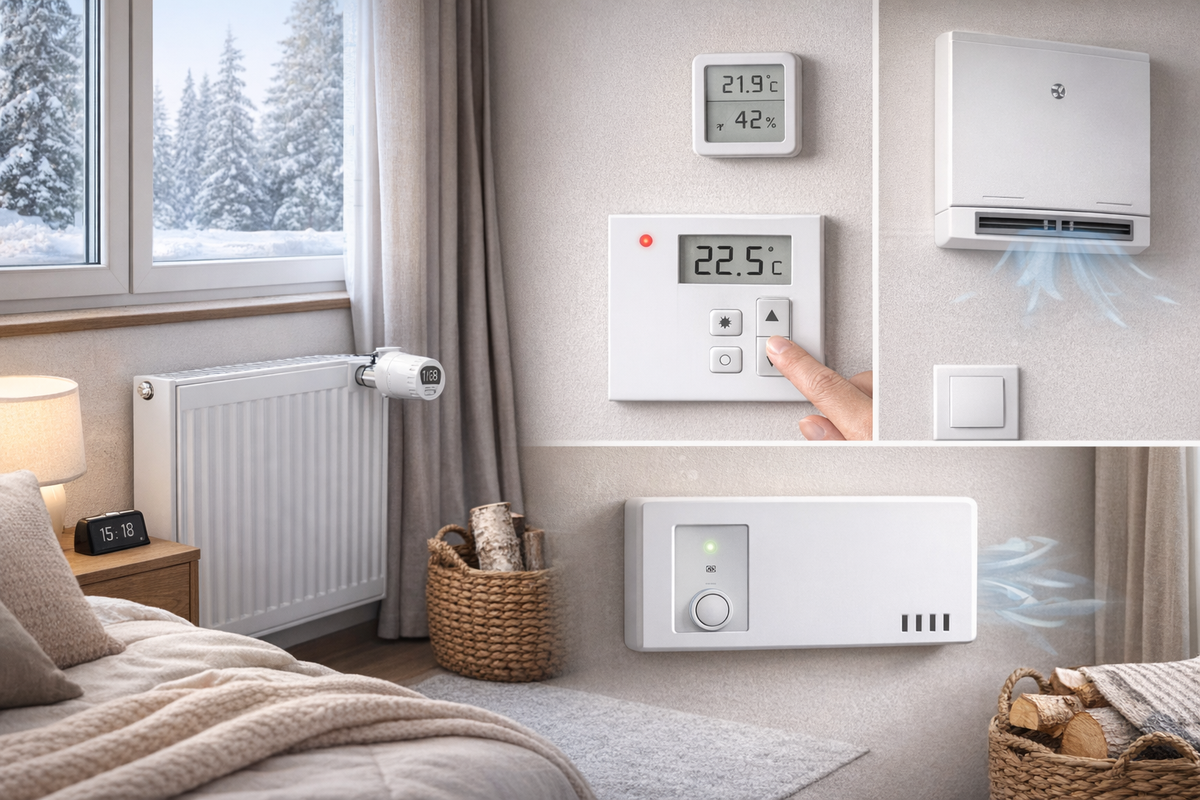
🏠 How heating works in Finland: why “stable” matters more than “hot”
Finnish homes are usually tuned for steady comfort, not the dramatic effect of “touch the radiator and burn yourself.” As a result:
✅ the temperature stays fairly even (often around 20–22°C, but it depends on the building and settings)
✅ the system “adds heat” gently, without big swings
✅ a lot is automated: sensors respond to room air conditions, not your emotions
So the first guest rule is: judge the comfort of the room, not the radiator. If the room feels comfortable, the system is doing its job — even if the radiator feels “almost cold.”
🔥 Radiators and thermostats: why the radiator is warm (not hot), and how to set it properly
In Finland, a radiator often works together with a thermostat: it measures air temperature and regulates heat flow. That creates the common “radiator paradox”:
- radiator is warm → the room is already comfortable
- radiator is cool → the system is “paused” because it has reached its target
- radiator heats up periodically → the system doses heat as needed
Important nuance: thermostats don’t always react instantly. Give the system 10–30 minutes after you change the setting — especially in newer buildings.
- ✅ Turn it up by +1–2 steps → wait 10–30 minutes (don’t keep spinning it nonstop).
- ✅ Don’t cover the radiator tightly with curtains or drying laundry — sensors can “lie.”
- ✅ If there’s a draft by the window, the issue is often seals/venting, not the radiator.
- ⚠️ Don’t drop it to “zero” overnight: it can take much longer to warm up again.
🦶 Underfloor heating: where it’s controlled and why it doesn’t feel warm “right away”
Underfloor heating in Finland is almost a classic in bathrooms, entryways, and on ground floors. It’s often not meant to create “heat,” but to:
✅ dry floors faster after showers / snowy shoes
✅ remove the feeling of icy tiles
✅ help maintain comfortable humidity
Why it can feel like it “doesn’t work”:
- underfloor heating has high thermal inertia — it warms up gradually
- many systems are set to moderate temperatures for safety and efficiency
- controls may be on a separate thermostat (in a hallway, utility panel, or on a wall)
Practical approach: choose a moderate level and avoid maxing it out without need. If you dry shoes or clothes, do it carefully. A related everyday guide that pairs well with this is Sanitation in Finland: drains, floor traps, smells — what’s normal.
💨 Ventilation in Finland: why it isn’t turned off and what sensors do
The most common “tourist mistake” is trying to block a ventilation vent because it “drafts” or “makes noise.” In Finland, ventilation is part of a building’s health system:
✅ removes humidity (especially after showers and cooking)
✅ reduces condensation on windows
✅ helps prevent smells and mould
✅ in newer buildings, can respond to sensors (e.g., air quality)
If the air feels “dry,” that can also be normal: in winter, ventilation + cold outdoor air can dry the indoor environment. In that case, it’s better not to “break” ventilation, but to use gentle fixes: keep a bowl of water out, dry towels in the bathroom, and avoid overheating.
😮💨 Cold, stuffy, dry: a quick algorithm that actually works
As a guest, you don’t need theory — you need a clear sequence.
🚪 Why doors close by themselves — and why Finns don’t wedge them open
Self-closing doors aren’t “Nordic design quirks.” They’re practical:
✅ keep heat within zones (especially hallways and corridors)
✅ help ventilation work predictably
✅ improve fire safety
Tip: don’t block doors for long periods with towels or objects. If you need air, do short, controlled airing.
🧺 Drying clothes and humidity: how not to turn your room into a sauna
Finnish spaces are often well ventilated, but drying still needs common sense:
✅ dry items in the bathroom/laundry area if available
✅ don’t cover radiators tightly with thick clothes (safety + efficiency)
✅ dry technical fabrics gently, without extreme heat
If you plan to do laundry on your trip, a logical next guide is Laundry in Finland: laundry rooms, drying cabinets, and settings (kuivauskaappi / kuivaushuone).
✅ Guest checklist: a 60-second “home check”
🧾 Summary: Finnish “comfort without drama” logic
Finland rarely forces guests to be engineers — but it does sometimes ask you to accept a local philosophy: heat doesn’t have to be loud or scorching. Radiators may be warm, underfloor heating slow, and ventilation persistent. In a normal scenario, that gives you stable comfort without swings and without dampness.
If you made it this far, save this guide “for winter” and share it with friends staying in Airbnb or visiting Finland for the first time. And tell us in the comments what surprised you most in Finnish homes: “dry air,” “lukewarm radiators,” “doors with personality.” Real cases make this guide stronger.
❓ FAQ
That’s often by design: the system controls room air temperature and doesn’t keep the radiator hot constantly. Judge the room comfort, not the metal temperature.
Many systems respond with delay. Wait 10–30 minutes and adjust in small steps instead of jumping straight to maximum.
Not necessarily. Underfloor heating is often set to a gentle level and warms up slowly. If there’s no change after a couple of hours, message the host/reception.
Better not. Blocking vents often leads to humidity, smells, and foggy windows. If it truly drafts strongly, ask the host to check settings.
Cold outdoor air + heating + ventilation can dry indoor air. Lowering the temperature slightly, drying towels in the bathroom, and adding gentle humidity usually help.
Often it’s heat zoning + safety. Don’t wedge doors open for long periods; air out briefly and deliberately.
Usually yes, with basic caution: proper chargers, dry surfaces, don’t overload extension cords. If you want a detailed 230V/plug safety guide, see Sockets and charging in Finland: 230V, adapters, and safety.

0 comments
Log in to leave a comment