



✈️⛴️ Tickets in Finnish: flights, ferries and cruises without hidden "taxes" and surcharges at the counter
If you have bought tickets in countries where a sign suddenly appears at the airport saying "local tax payable here", Finland may seem too calm at first. Here, a different logic is more common: you see the final price when you buy, so that's what you pay.
In this article, we will discuss:
● what taxes and fees are already "built in" to air and ferry tickets;
● what the mysterious codes in the fare breakdown mean (YQ/YR/XT and friends);
● where there really is a surcharge, but it is not a "tax" but an option (luggage, seat selection, cabin, car, meals, etc.).
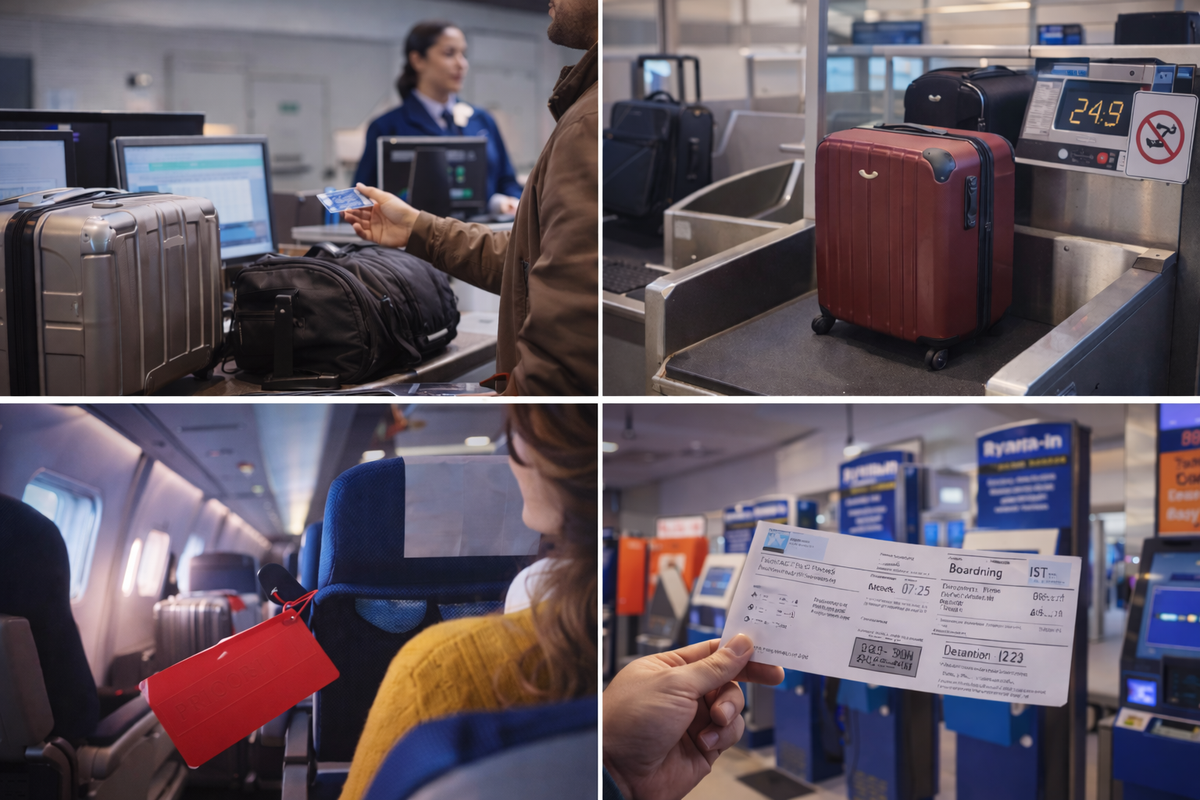
No "departure taxes at the counter" in a normal scenario — airport and port fees are included in the ticket price at the time of purchase.
You may only be asked to pay extra for additional services (luggage, seats, cabins, cars on ferries, etc.).
Why you shouldn't be alarmed by "taxes" on your ticket in Finland
The ticket (or booking confirmation) often has a section called "Fare / Taxes / Fees". Visually, it looks like accounting, but in essence it is simply a transparent breakdown of the final amount.
The typical structure looks like this:
● Base fare / Tariff — basic cost of transportation
● Taxes / Airport / Port fees — mandatory fees (airport/government/port)
● Carrier charges — airline charges (sometimes fuel/operating charges)
● Service/booking fee — commission charged by the platform or agent (if you did not purchase directly)
Important note: even if there are 5–10 "fee lines" listed on the ticket, you almost always need to do nothing. You have already paid for them when you made the purchase.
If you want to understand the logic behind Finnish prices (and why the receipt looks like it has "ALV at the bottom"), bookmark this: ALV and tourist receipts: the simple logic behind Finnish prices.
"Codes on the ticket" (YQ / YR / XT / PSC): decoded in plain language
Passengers most often google exactly this: "what does YQ mean?", "why XT?", "airport fee Finland?". Below is a practical cheat sheet.
If you often see the words "service fee / handling fee / booking fee" and want to understand them without getting stressed, this separate guide will come in handy: Fees in Finland: eco fee, palvelumaksu and service fees — how to understand them.
Air tickets: where "taxes are already included in the price" and where additional payments are possible
What is almost always included (and not discussed at the counter)
● mandatory airport fees;
● government/passenger fees, which the booking system adds automatically;
● basic fare;
● sometimes — hand luggage (but this depends on the airline and fare).
Where the surcharge is real (and that's normal)
Here is a list of situations where people most often say "it's a tax!", although in reality these are options or fare rules:
- Excess baggage
If the fare only includes small hand luggage and you arrive with a suitcase, you will have to pay extra for the additional baggage. It is usually more expensive to pay at the airport than online. - Overweight/oversized baggage
The same applies here: "a few extra kilograms" actually translates into a specific price. This is not a "tax", it is a penalty charged by the carrier for violating the terms and conditions. - Seat selection, priority, fast track
Only pay if you want to. It does not affect the price of the flight. - Changes/refunds
Many low-cost fares are either non-refundable or subject to a change fee. This is also not a tax, but a fare rule. - Printing boarding passes/late check-in with low-cost airlines
A rare but painful scenario: part of the low-cost model relies on passenger discipline. If you don't check in online on time, you pay a fee. This is unpleasant, but legally it is not a "tax".
Ferries and cruises: port fees are included in the ticket price, but upgrades are separate
Ferry travel in Finland is a special treat: the sea, the lights, the buffet, the cabin "like in a small hotel". And here, too, it is important to distinguish between two things:
What is usually included in a ferry ticket
● passenger transport itself;
● port fees (as part of the fare);
● basic access on board and standard areas.
What you most often pay extra for
● cabin (class/window/location);
● space for a car/motorbike/bicycle (if transport is not included);
● meals/buffet/breakfast-dinner packages (often cheaper to book in advance);
● spa/sauna/special areas (depending on the ship);
● pets (sometimes a pet-friendly option/place is required).
Cruise products (even short ones in the Baltic) sometimes include "onboard charges" — for example, paid restaurants or paid beverage packages. But the key point remains: there is no separate "pay port tax" cash desk waiting for you in the port of Finland. Everything is clearly shown before payment.
7 situations that look like "additional tax charges" but are not
- The aggregator site added a booking fee
Intermediary commission. This can be resolved by choosing another seller. - Payment in another currency / conversion
The total amount in the bank differs by kopecks/euros due to the exchange rate or commission. - Dynamic pricing
Cheap tickets are sold out — the price has gone up. Tax has nothing to do with it. - Payment hold
Sometimes the bank briefly shows a higher amount/two lines — then everything collapses. - Paid options "at the last step"
Seat selection, baggage, meals, insurance — all voluntary, but interfaces like to offer them. - Surcharge for changes
This is a tariff policy, not a government fee. - Payment for a car/cabin on a ferry
There is one fare for passenger transport, but transporting vehicles and comfort is a separate economy.
Why the amount in the bank app may differ from the ticket price
To avoid any confusion:
● Bank commission for currency transactions (if the purchase is not in euros or the bank considers it so)
● Conversion rate (especially if the platform displays the price in one currency and the debit is in another)
● DCC (Dynamic Currency Conversion): sometimes the terminal/website offers to "pay in your currency" — it sounds convenient, but the exchange rate may be less favourable than your bank's
● Temporary blocking for certain types of payments (usually disappears quickly)
If you have a choice, pay in EUR. This way, there will be fewer surprises with the exchange rate and "conversion fantasies".
Checklist before paying for a ticket: what is really important to check
- The total amount — this is what matters
- What's included: luggage, hand luggage, meals, cabin/seat
- Change and refund policy
- Name and documents (especially for flights)
- Currency of payment (preferably EUR)
- Seller's commission (if there is a service/booking fee — check before paying)
If you are travelling around the country not by plane or ferry, but by train/bus/public transport, it is convenient to keep the following hub handy: Transport in Finland: how to buy tickets for trains, buses, trams and scooters.
Conclusion: in Finland, "taxes in the ticket" are about transparency, not traps
The Finnish transport logic is straightforward: taxes and mandatory fees are included in the fare and shown separately so that you understand the price structure. Passengers do not need to run around ticket offices looking for "departure tax" or "port fees" before boarding.
If there is an additional charge, it is almost always explained by one of three things:
● you added an option (luggage/seat/cabin/car);
● you have violated the fare conditions (excess weight/late check-in);
● the ticket seller has charged a service fee (and this is visible in advance).
Share your experience and ask a question
If this analysis has alleviated your concerns, please share the article with a friend who is always anticipating a "hidden tax at the counter."
And in the comments, write what exactly caused you doubt: the code on the ticket, a strange line in the payment, an extra charge for luggage or a "service fee". We will analyse your specific screenshot/scenario point by point — without shame and without panic.
FAQ
No. For regular passengers, airport fees are included in the ticket price at the time of purchase. There is no separate "departure tax counter" at the check-in desk, and it is not used.
YQ/YR usually refers to carrier fees (operating/fuel/domestic). This is not a government tax, and you do not pay anything separately.
XT often means a "bundle" of different taxes/fees that the system does not itemise. For the passenger, this does not change anything: the amount is already included.
In a normal scenario, no: port fees are included in the fare. Additional charges are only possible for selected services (cabin, car, meals, upgrades), and these are usually known in advance when purchasing.
No. This is a commission charged by the seller/platform or payment service. It must be shown before payment. The following will help you understand these lines: Fees in Finland: eco fee, palvelumaksu and service commissions — how to understand them.
Not the taxes themselves. But there may be an additional charge if you purchase extra options or violate the terms of the fare (excess baggage, late check-in with a low-cost airline, etc.).
Most often, the reason is the bank's exchange rate/commission, the choice of currency for the debit, or a temporary block. If possible, pay in EUR and avoid conversion "at the service rate".
Not for tourists. Tickets are kept for boarding, refunds, business trip reports or disputes with the carrier. The Finnish tax authorities do not expect tourists to declare their tickets.
Most often, it is not in "taxes" but in options: luggage, seat selection, meals, cabins, car transport, paid parking at ports/in cities.

0 comments
Log in to leave a comment