



🛣️ Roads without vignettes: how to drive in Finland without hidden fees, tolls and "tax traps"
If you google "do you need a vignette in Finland" or "is there a toll to enter the centre of Helsinki" — you're not paranoid, you're just an experienced traveller. There are plenty of countries in Europe where road tolls are hidden in the small print. Finland is pleasant in this sense: you can drive through the country without any worries, but there are three areas where tourists most often "stumble" — parking, fines and certain types of water transport.
Below is some simple logic: what is really free, where money appears honestly (according to the sign/in the app), and what mistakes usually lead to unpleasant letters.
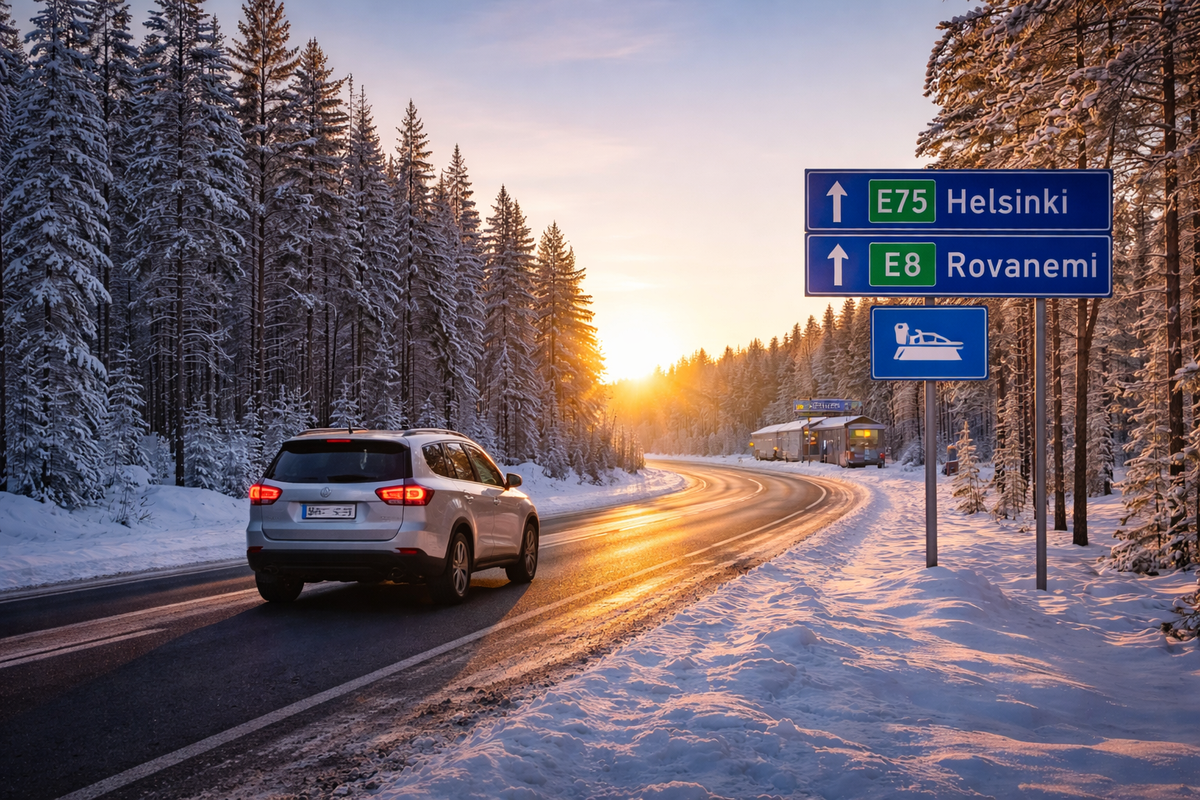
- No vignettes — stickers/online vignettes are not usually required for passenger cars.
- There are no toll motorways "like in France" — you will not encounter any barriers on the roads.
- Toll roads in the city centre like the congestion charge — there are usually none, but there are restrictions indicated by signs.
- Actual tolls: parking, fines, some ferries/crossings, sometimes paid parking at facilities.
🚫 Do you need a vignette in Finland (and where they look for it in vain)
A vignette is when you pay for the "right to drive" on the roads (a sticker or online registration). In Finland, tourists usually do not need to do anything like this: just get in the car and drive — no stickers on the windscreen and no "road tax online".
So why are there so many worrying questions? Because people come from countries where vignettes are mandatory, and their brains habitually look for a ticket office.
What is important to understand:
● If you are a tourist and are simply driving a rented or your own car, there are usually no road "entry tickets".
● If you are a resident and live in the country permanently, there is a different level of relationship with the state (taxes/registration/insurance) — but that's another story.
🛣️ Are there toll roads in Finland?
The classic model of "toll road → barrier → ticket → cash desk" does not usually exist in Finland. Travelling by car in the country is considered a basic freedom: you can drive on E-roads, regional roads and city streets without encountering any tolls.
But! And here it is important not to get confused:
● the absence of toll roads does not mean that "you never pay on the roads";
● you may have to pay for roadside services: parking, fines, ferries, and sometimes paid parking at facilities/hotels.
🏙️ Is there a toll to enter the city centre (Helsinki / Turku / Tampere)?
The query "toll roads to the city centre" usually refers to two things:
- a city entry charge (as in London/Stockholm),
- a fine for "driving in the wrong place".
In Finland, the latter is more common.
How it works in practice
● In historic/pedestrian areas, there may be signs saying "public transport only", "deliveries only", "taxis only", "brick" or "time limit".
● There are streets where you can drive but not park (and these are different signs).
● Often, the centre is "free", but parking in the centre is paid, which creates the feeling that "they charged me for entering".
The main rule in Finland (and this is very northern) is that if something is prohibited or subject to a fee, it is indicated by a sign/plate/parking zone. "Hidden taxes" are not the style of the country.
💳 What tourists actually pay for on the road
Here is an honest list of "where money appears on the route," even if the roads are free:
- Parking (the most common item).
- Fines: speeding, parking, lanes, phones, seat belts.
- Ferries/crossings (not always, but sometimes).
- Paid parking at facilities: shopping centres, arenas, hotels, ports.
- Paid rental options: additional driver, child seat, drop-off in another city — this is already a matter of contract.
If you are driving a rental car, keep in mind that fines may be sent to the rental company, and an administrative fee is sometimes added to the fine. This is not a "tax" but a service charge. Here's what you need to know about renting a car in Finland: deposit, insurance, fuel and fines.
🅿️ Parking in Finland: how to read signs and avoid fines
Parking is the main source of surprises, not because it is tricky, but because tourists are in a hurry and do not read the sign to the end.
A mini-dictionary that really helps
● P — parking.
● Lisäkilpi / additional sign — sign with conditions (time, zone, disc, payment).
● Maksullinen — paid.
● Kiekko / pysäköintikiekko — parking disc (if required).
● Aikarajoitus — time limit.
Parking disc (pysäköintikiekko): why do you need it?
In some places, parking is "free but limited in time". To prevent you from staying there all day, a blue parking disc is used: you set the start time of parking, and it shows how long you have been parked.
If the sign indicates a disc, not having one can result in a fine, even if parking is "€0".
Where and how to pay for parking
The most common options are as follows:
● parking meter/terminal nearby;
● parking app (different operators may be available in different cities and areas);
● sometimes payment at the reception/inside the building (rare, but possible at some facilities).
An important psychological tip: don't look for "one button for all of Finland". Parking in Europe often works through different operators. Therefore, before travelling, it is useful to have 1-2 apps installed and a card that accepts online payments.
⛴️ Ferries and crossings: paid or free
Finland has a lot of water, islands and routes across straits — and hence the eternal question: "Is a ferry like a toll road?"
The logic here is as follows:
● some crossings operate as part of the road network and are perceived as ordinary roads;
● some routes are transport services, with tickets, timetables and fares.
To avoid guessing, take a pragmatic approach:
● if you are planning a route through the archipelago, check in advance whether you need a reservation and a ticket;
● if the crossing is paid, this is usually known before boarding (ticket office/online/information from the operator).
🧊 Winter, roads and "hidden risks" that are not about money, but about safety
Finland is very honest in winter: it doesn't pretend that everything is okay when it's not. Therefore, road surprises are more often weather-related than financial:
● darkness (long nights);
● slippery courtyards and car parks (not the road, but the "last 20 metres");
● snowfall and visibility;
● moose/deer in the north.
If you are travelling far or to Lapland, it is safer to have a plan B in terms of time and keep warm "standby" clothes in the car. Finns do this automatically.
🧾 Mini-table: route → payment → what to remember
✅ Checklist: "I'm travelling in Finland and don't want any surprises"
● Make it a habit: first the sign, then the car door.
● Keep a parking disc with you if you are travelling in cities and suburbs.
● Install 1–2 parking apps in advance (and link your card at home, not in the cold).
● Before reaching the archipelago, check whether you need a reservation for the ferry.
● If you are driving a rental car, keep Car rental in Finland: deposit, insurance, fuel and fines handy to understand the mechanics of fines and deposits.
🧊 Finland is a country where "paid" is usually written
Finnish roads are pleasant because they don't like quests: there are no vignettes, no barriers on the roads, and "paid entry" often only exists in alarming search suggestions. The actual costs associated with a car are almost always predictable — parking, fines, individual crossings and services.
If you want to drive calmly, follow this simple ritual:
signs → parking → payment/disc → photo of the sign → let's go.
Then Finland will truly feel like a country without hidden fees, where money is taken not "on a whim" but according to the rules.
💬 Share and ask a question
If you found this article helpful, save it and send it to friends who are planning to travel to Finland by car.
And in the comments, write your route (city → city) and where you plan to park/stay overnight: I'll tell you which sections usually have "parking surprises" and how to avoid them without unnecessary stress.
FAQ
Usually not: tourists do not typically purchase road vignettes for passenger cars. The main fees are related to parking and fines, not motorways.
As a rule, there is no "city entry fee", but there are areas with restrictions indicated by signs (public transport lanes, temporary bans, pedestrian streets). Plus, paid parking creates the feeling of a "city centre fee".
It is a parking disc for free parking with a time limit. If the sign says "kiekko", the disc is mandatory — even if the price is €0.
Often yes (parking meter/app), but there are places where it is more convenient to use a specific operator's app, or where the parking meter does not accept all cards. It is better to have a backup payment option.
No. There are different types of crossings in the country: some are considered a continuation of the road, while others are a separate transport service. Before travelling through the archipelago, it is best to check the conditions of a specific crossing.
No. A fine is a penalty for breaking the rules. When renting a car, the rental company may charge an additional administrative fee, but this is not a tax either. For more details, see Car rental in Finland: deposit, insurance, fuel and fines.
Usually not. In winter, it is not the fees that increase, but the risks: travel time, visibility, parking conditions. Therefore, it is better to allow extra time and not plan your route too tightly.

0 comments
Log in to leave a comment