



🙏Churches, memorials and ceremonies: a respectful visit
In Finland, 'quiet spaces' aren't just cathedrals and chapels, but also memorials, places of remembrance and military history cemeteries. In these places, silence itself is a form of respect. It's not common to make sudden moves, talk loudly, or turn a visit into a photo shoot no matter what.
To avoid any awkwardness and break no unwritten rules, it's useful to prepare a small "behaviour kit" in advance. This should include how to prepare, what is appropriate inside, where to stop for photos and where it's better to stay silent..
Before entering: three steps without awkwardness
Before climbing the steps or entering the memorial gates, it is worth pressing the internal "pause" button. This is the moment when we switch from tourist mode to a respectful visit — without fuss or unnecessary noise.
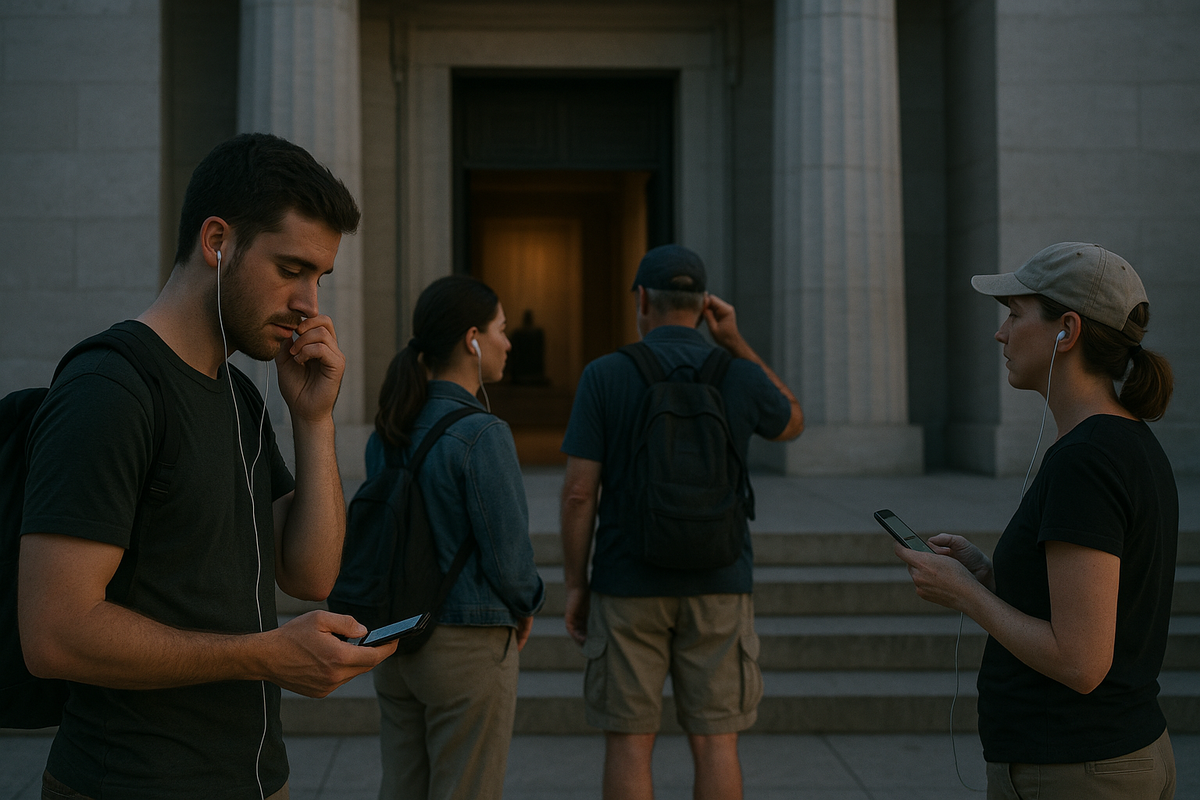
Switch to "silent mode" before reaching the door.
Put your phone on silent, turn off vibration and flash, and lower the screen brightness. If you need a translation of the inscriptions, an audio guide or a map, you can use all of these, but with headphones and at minimum volume.
Dress modestly and neutrally.
In Lutheran and Orthodox churches in Finland, it is traditional to remove headwear; religious or medical exceptions are fine, but sports hoodies and unbuttoned T-shirts are best left outside. Clothing that is too revealing looks out of place in a church, even if there are tourists around.
Photography is only permitted after clarification.
Outside of services, general interior shots without flash are often permitted, but the rules depend on the specific church or memorial. One quick question at the reception desk or to a minister will clear up any doubts:
"Is photography allowed here?" / "Saako täällä kuvata?" — and you will understand the boundaries.
How to move around the space: calmly, predictably, without playing the "leading role"
Inside Finnish churches and memorial halls, a sense of calm flow is appreciated: people come in, sit down, remain silent, and sometimes move quietly. The more inconspicuously you fit into this flow, the more respectful your visit will appear.
Seats are on the side or closer to the back rows.
If you are a guest and not a participant in the ceremony, it is better to choose benches on the side or away from the altar. This way, you will not be the centre of attention and will be able to observe without disturbing the ritual.
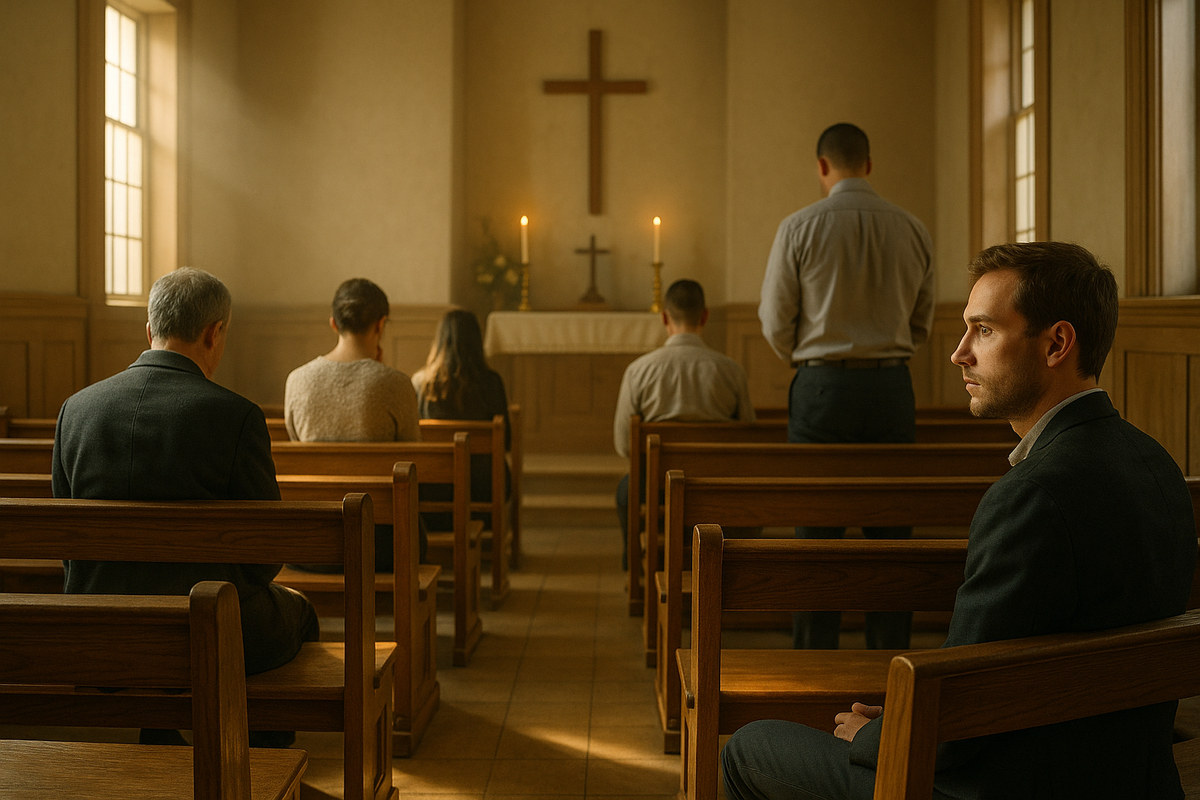
Move only during breaks.
If there is a service or ceremony, it is better not to walk during prayers, hymns or moments of silence. It is more appropriate to move closer/further away during a natural pause.
Backpacks should be carried in front, and aisles should be kept clear.
Large backpacks and bags obstruct the passageway and may bump into people or interior objects. Keep them in front of you and make sure you do not block the way to exits, candles and places of worship.
Stairs, steps, and pedestals are not couches or photo zones.
The steps of a temple, the bases of monuments and the pedestals of memorials are part of the architecture and ritual, not a place to sit for long periods of time. A couple of quick shots from the side is the maximum; sitting, lying down or having a photo shoot on the steps in Finland is considered extremely disrespectful.
Memorials and places of remembrance: fewer poses, more tact
Memorials in Finland, especially military and national memorials, are perceived as serious spaces. People come here not for photos, but for the opportunity to remember and pay their respects.
Try to avoid posing.
Selfies in front of walls with names, playful poses at monuments or theatrical gestures are inappropriate here. It is better to stand quietly, look, read the inscriptions and, if you wish, linger in silence for a moment.
Flowers and candles should only be placed in designated areas.
If you want to leave flowers, it is better to place them where there is already a bouquet or a specially designated area. A random bouquet "wherever you like" can disrupt the general order.
Move carefully and respectfully towards other visitors.
Do not overtake people, do not run "ahead for a better view", do not walk on the lawns unless it is provided for. A light, calm pace is the ideal speed for such spaces.
Photos, videos and publications: where is the line?
The question of whether photography is allowed in churches in Finland is easily answered: the rules depend on the specific location. However, there are a few principles that are almost universal, and they make life much easier for tourists.
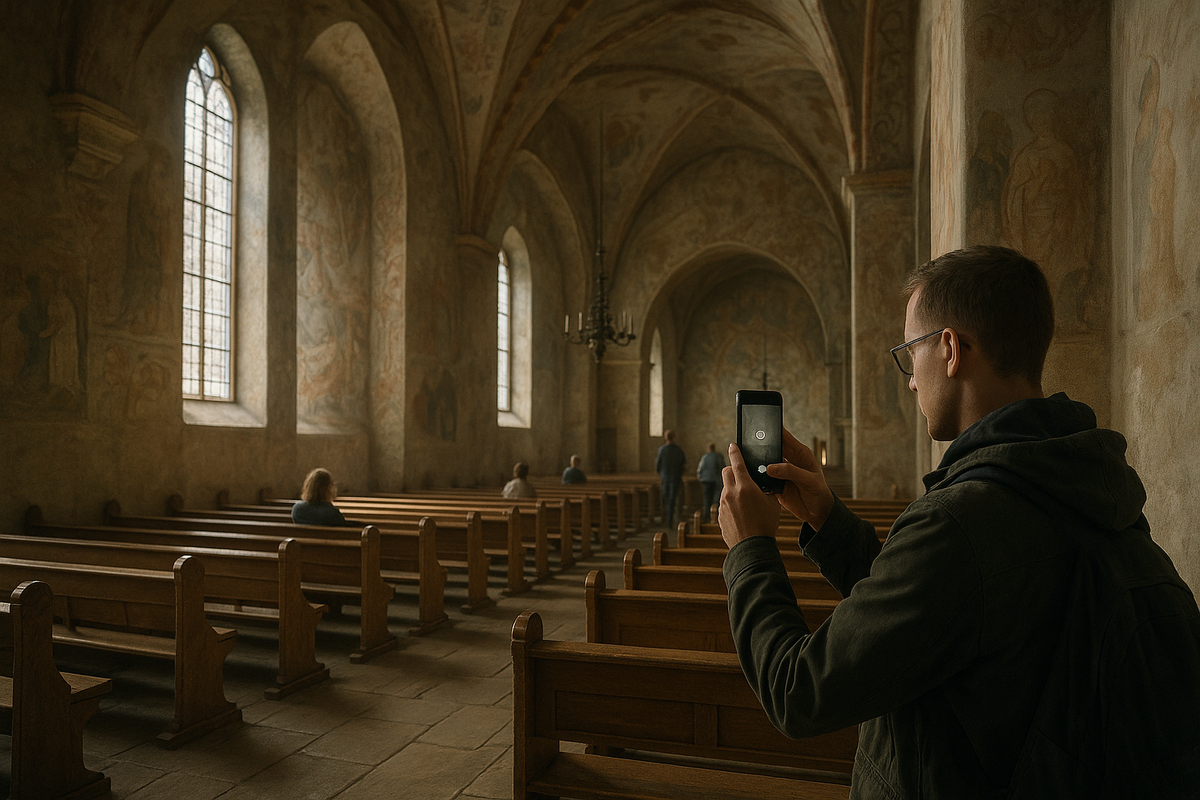
Flash photography is always a no-no.
Even if the room seems dark, flash disturbs the overall atmosphere, distracts people and can damage old frescoes or objects. It is better to increase the exposure time or settle for soft, natural light — it is precisely this that conveys the character of the place.
Tripods and selfie sticks are questionable.
Inside churches and in cramped memorial halls, tripods are often prohibited: this is both a safety issue and a matter of crowd flow. A selfie stick next to an altar or memorial is also considered a breach of etiquette. If you really need to use one, check with the staff.
Only photograph people with their consent.
People come to churches and memorials for personal reasons: to pray, to remember, to grieve. Taking close-up photos of strangers without their explicit consent is a bad idea, and children can only be photographed with the permission of their parents or guardians.
Post on social media without personal information.
If you share your photos, try not to post close-ups of other people's faces or add captions with names and personal stories unless people have asked you to do so. Focus on the architecture, light and atmosphere, not on other people's personal lives.
Quick cheat sheet: what is appropriate / better to ask / not to ask
Set your phone to silent before entering. Screen down, flash and vibration off. If you need translation/audio guide, use headphones and keep the volume to a minimum.
Clothing should be modest. Headwear should be removed in most traditional temples (except for religious or medical reasons).
Sit on the side or at the back, move during breaks. Keep your backpack in front of you and do not block the aisles.
Photos without flash. Off duty: general shots, taken quickly and respectfully, without blocking the view of other visitors.
At memorials — briefly and quietly: standing, without posing or touching the pedestals. Place flowers/candles neatly in the designated areas.
A short question solves everything: “Is photography allowed here?” / “Saako täällä kuvata?” — and you’re acting within the rules of the place.
Photography during active services/ceremonies. In most cases, it’s best to refrain or obtain permission from staff first.
Tripods and selfie sticks are often restricted for safety reasons and to keep the flow of visitors smooth. Check the rules at the reception desk.
Portraits of staff and visitors — only with their explicit consent and when no service/ritual is taking place.
Donations, candles, flowers: ask where they can be placed so as not to interfere with the ritual or the movement of people.
Front row, restricted areas, moving furniture — only with permission from a staff member or official.
Photos of children — only with the consent of parents/guardians. It’s better to avoid portraits in “quiet rooms”.
Flash, shutter sounds, loud calls — no. Any sudden light/noise disturbs the silence and concentration of those gathered.
Entering service/altar areas, climbing onto the pulpit or stepping behind barriers without a direct invitation is not permitted.
Touching exhibits, icons, memorial plaques or rearranging interior items is not allowed without permission.
Sitting/lying on steps, fences and pedestals, staging long photo shoots and blocking passageways is not permitted.
Eating/drinking inside and leaving rubbish behind is not allowed. Please use café areas or go outside.
Flying drones in the vicinity of temples and memorials without permission is not allowed (it disturbs people and is often prohibited by site rules).
❓ FAQ
Outside of services, many churches allow general shots without flash or tripods, but specific rules vary. It is best to check with the staff or on the information board before taking out your camera.
Modest, neat clothing: covered shoulders and knees are a safe bet. In classical churches, headwear is removed unless it is a religious covering or medically necessary.
No. Steps, staircases and pedestals are considered part of the sacred space or architecture. Sitting and posing on them is perceived as disrespectful — it is better to take a photo nearby and quickly clear the way.
Speak quietly, do not run, do not laugh loudly, do not arrange photo shoots. Flowers and candles should be placed in designated areas, and visitors should walk on the paths, without walking on graves and lawns, unless this is permitted.
Most often, no, especially indoors: they interfere with the flow of people and can be unsafe. For interior shots in Finland, only a camera or phone held in your hands is usually used.
Large portraits of parishioners, staff or ceremony participants are only permitted with their explicit consent. Photographing people during prayer or personal grief without permission is a gross violation of etiquette.
Only with the express consent of their parents or guardians. If there is even the slightest doubt, it is better to refrain from taking the photo.
Yes, but only with headphones and at minimum volume. An audio guide played aloud in a temple or memorial hall disturbs the silence and disturbs others.
No. Drinks, food and rubbish are not allowed inside temples and memorials. It is better to go outside or to the nearest café for coffee and snacks.
As a rule, no: it is prohibited by both the rules of the site and general safety regulations. It is better to focus on ground-based shooting points and indicate the location in the frame through architecture rather than flight.

0 comments
Log in to leave a comment