



🌿 Personal boundaries, silence and punctuality in Finland: what tourists need to know
Finnish communication: calm, careful and predictable
The Finnish way of communicating is all about three things: respect for boundaries, being clear and being on time. Here, people don't like to invade personal space, interrupt or waste time. And if you can speak briefly and to the point, you'll be understood perfectly.
This article is your "key set" to natural, relaxed communication with Finns in the city, at work, in the family or on holiday.
🤏 Personal space: distance is a sign of care, not coldness
Finns value psychological comfort. Therefore:
● They keep their distance in queues and conversations — about a step and a half.
● They do not touch each other during conversation, even in a friendly manner.
● They do not hug when greeting people — only close friends and family.
● They do not pry into other people's affairs: questions about personal life, money or health are taboo during initial contact.
If you take a step back, it does not mean you are refusing to communicate. It is a sign of respect for shared space.
🤫 Silence is normal, not awkward
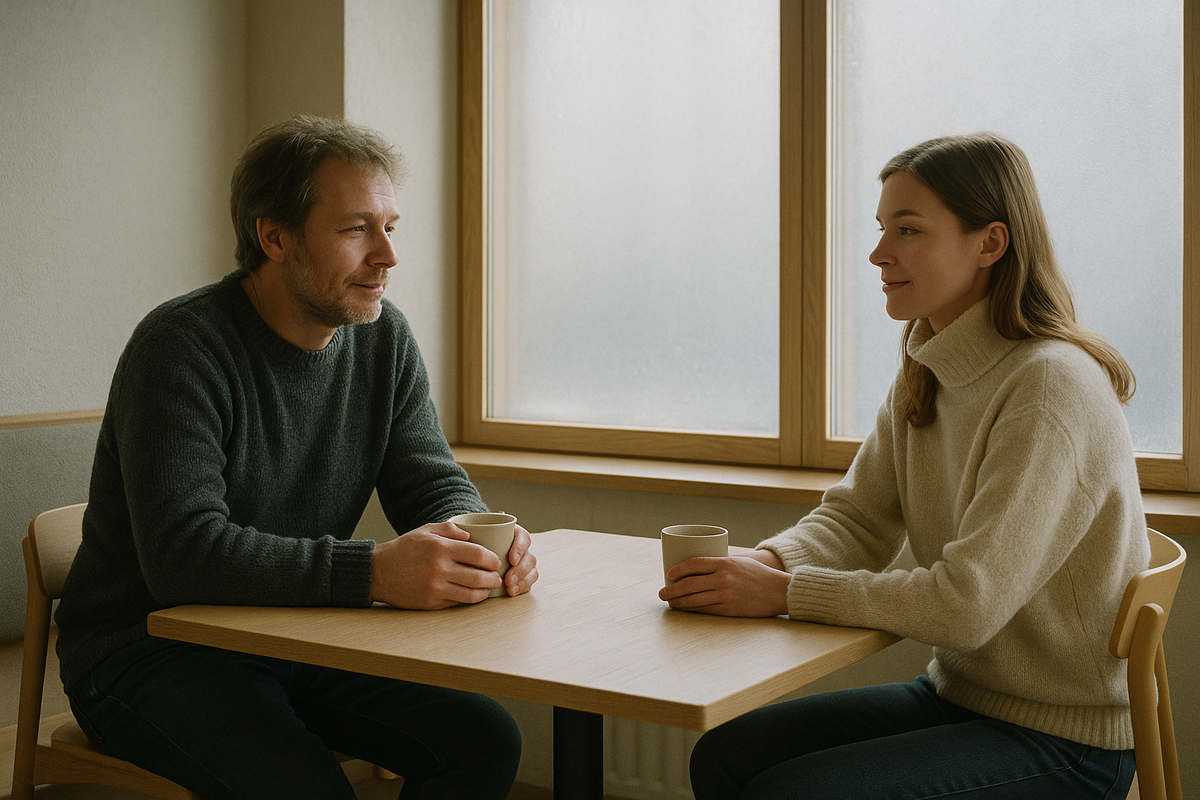
In Finnish culture, silence is not a "freeze" but a natural element of dialogue.
● A pause of 3–5 seconds is not considered strange here.
● People think before they speak.
● Silence can mean attention, not a lack of interest.
● Sometimes it is even a compliment: it means that you are easy to be around.
The strategy is simple: don't try to fill pauses artificially. Smile, change the subject, or simply continue the conversation when you have something to say.
⏱ Punctuality: respect for your own and other people's time
If there is a rule number one in Finland, this is it.
● Being 5 minutes late for a meeting is already noticeable.
● If you are running late, be sure to send a short message (SMS/WhatsApp).
● Arriving a little early is normal.
● If you promise to do something "on Friday," that means by the end of Friday. Not "when I remember."
Punctuality = predictability. And predictability is the basis of trust in Finnish society.
🤝 How to show initiative without being pushy
Finns like it when you speak directly but calmly:
● Keep your sentences short:
“Voinko auttaa?” — “Can I help?”
● If you are proposing an idea to a group:
“Ehdotan, että…” — “I suggest…”
● Do not expect a strong reaction: this is not a rejection, it is their style.
Initiative is valued — emotional displays are not necessary.
🙂 Humour: dry, calm, without sarcasm
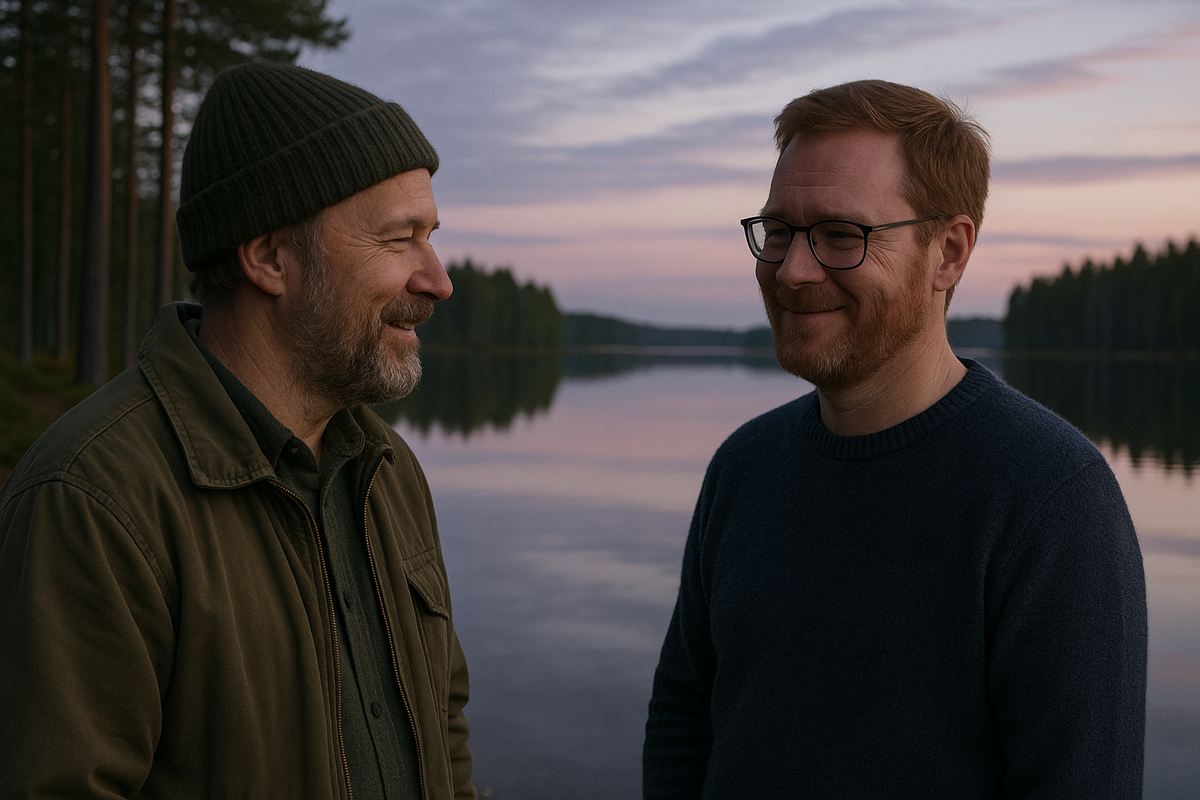
Finnish humour is:
● gentle self-irony,
● observations from life,
● "quiet" humour without loud laughter.
What doesn't work:
● sarcasm,
● jokes "on the edge",
● mocking people or nations,
● sharp comments.
If you want to make a joke, it's better to joke about the situation rather than the person.
🧩 Short dialogues that will help in real situations
Meeting
— Hei!
— Hei!
— Sorry, I'm a couple of minutes late.
— "Sorry, I'm a couple of minutes late."
— Ei haittaa. — "No problem."
In a shop
— Hello. I need a little help.
— "Hello. I need some help."
(It's normal to ask for help briefly and to the point.)
At work
— Can we begin? — "Shall we begin?"
— Sopii. — "That's fine."
❗ Typical mistakes made by foreigners
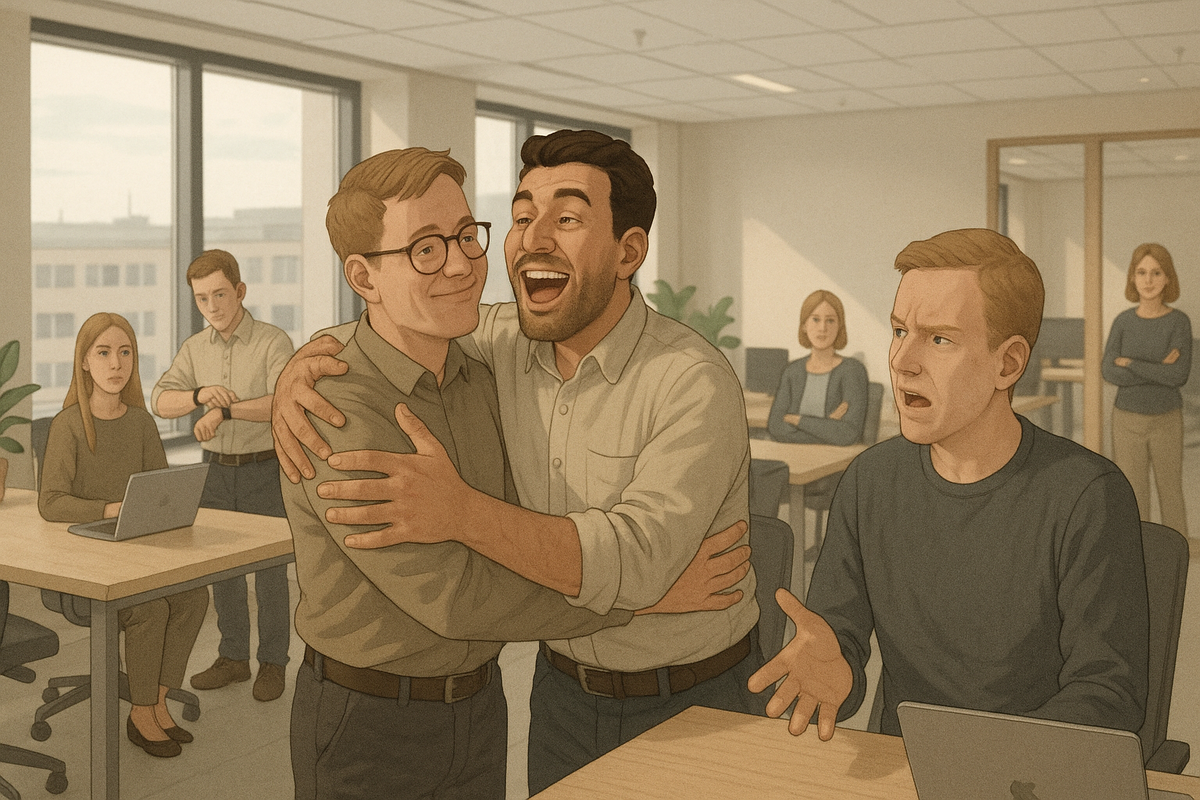
● Getting too close too quickly (hugging when meeting someone new).
● Interrupting while the other person is thinking.
● Speaking too loudly in coworking spaces/public transport.
● Being late without warning.
● Arguing too emotionally.
● They make personal compliments (about appearance, age), which can be embarrassing.
Tell us about your experience – what seemed easy and what raised questions.
Your stories and tips help other travellers feel more confident in Finland, and our guide makes communication between cultures easier and warmer.
❓ FAQ
For them, it is a sign of respect: a person should feel physically and emotionally comfortable. It is not a sign of coldness.
Pauses are a normal part of speech. They really think before they speak.
It is better to praise an action or idea (e.g. a presentation) rather than appearance.
Briefly: "Anteeksi, olen vähän myöhässä." — "Sorry, I'm a little late." And be sure to warn them in advance.
You have a little more freedom, but it is better to arrive on time. Be sure to give advance notice.
Don't panic. Smile, wait a couple of seconds, or suggest a new neutral topic.
The phrase "Kiitos juttuseurasta, minun täytyy mennä nyt" — "Thank you for the conversation, I have to go" — is ideal. No long excuses.
Yes. Finns appreciate directness without unnecessary emotion.
Short answers, no follow-up questions, a short pause. These are signs that it is time to gently exit the conversation.
Almost. It's part of the culture: being late is seen as disrespectful of other people's time.

0 comments
Log in to leave a comment