



🧩 Quiet areas and queues: how to be an "invisible" guest in the city
Finns value spaces where everyone feels comfortable: libraries with soft lighting, "quiet" train carriages, museum halls without the echo of ringing phones. It's not "strict" here, it's respectful. Below is a brief guide: how to speak, where to stand and what to do if someone "jumps" the queue.
🤫 What are "quiet zones" and where are they found?
In Finland, "quiet by default" is where people study, read, work or relax near others:
● Libraries (often with 'quiet rooms' and meeting rooms).
● Trains (marked 'quiet' carriages/sections) and sometimes 'quiet' areas in waiting rooms.
● Museums/galleries and historic temples.
● Family areas — please ask children to be quiet, but without reprimanding them.
The main rule: look at your surroundings. If everyone is whispering and not gesturing, you are in a "quiet" area.
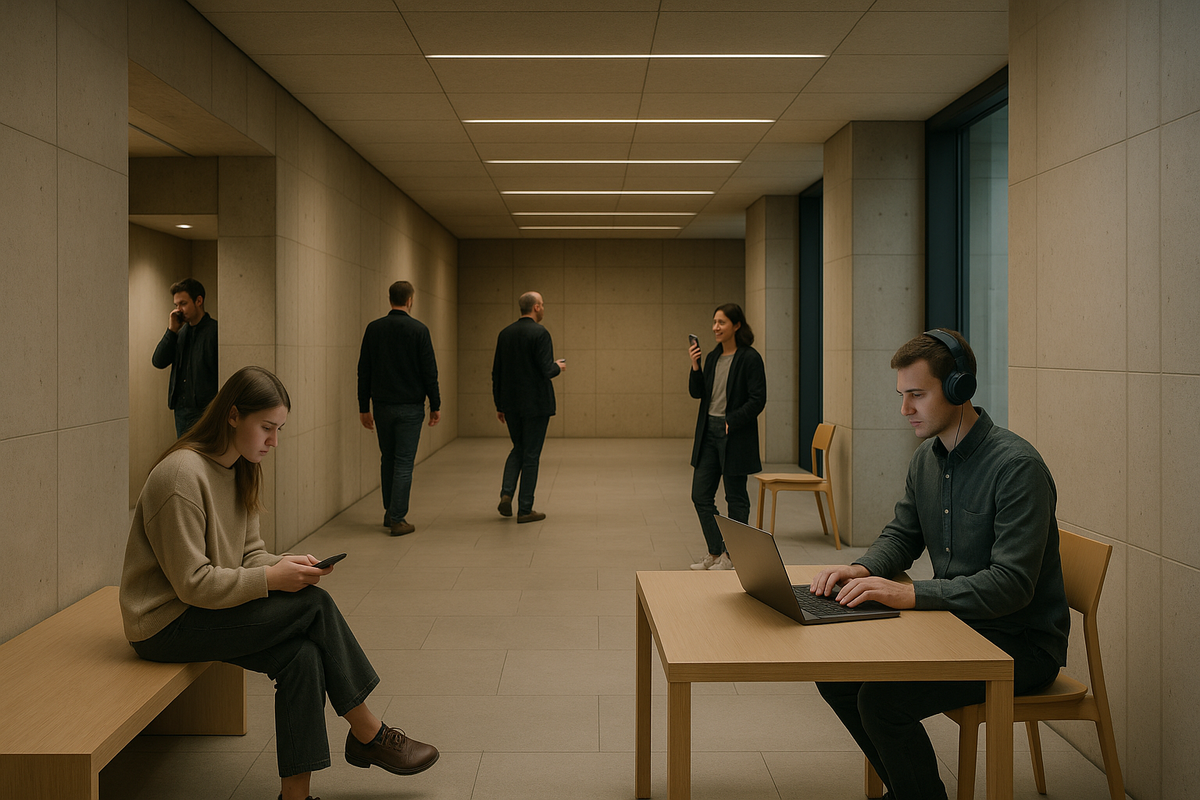
📵 Calls and messages: what to do "right now"
● Put your phone on silent/vibrate before entering the hall.
● Need to make a call? Go to the foyer/corridor/vestibule.
● Video calls — only outside "quiet" areas and always with headphones.
● Need a quick reply? Texting instead of calling is the norm.
● Keyboards/camera clicks: mute the shutter/keyboard sounds, type softly.
🎟️ Queuing the Finnish way: distance, pace, polite "signals"
● Get to the back of the queue — Finns strictly maintain order.
● Distance: half a step to a step (about the length of your forearm).
● If you let someone with a child/small purchase go ahead of you — a short "ole hyvä" ("please") and a step back.
● Stepping away for a minute? Ask the people behind you to "hold your place" and come back quickly.
● Did someone jump the queue? Stay calm: "Anteeksi, tässä on jono." ("Excuse me, there's a queue here").
🗣️ Volume and "tone" of speech: less is better
The Finnish "zero" volume is below average. Even outside "quiet" areas, people speak softly, listen attentively and do not interrupt. If you need to tell an emotional story, save it for a café or the street.
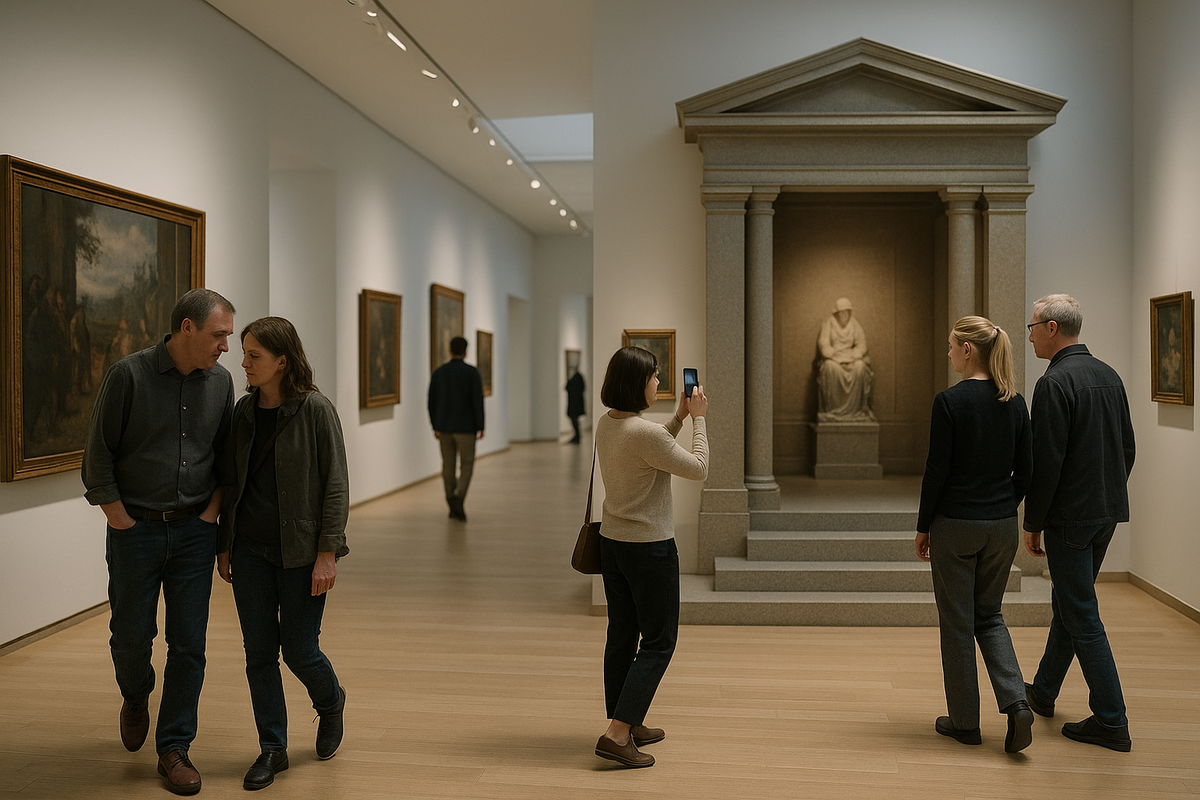
🎨 Museums, exhibitions, temples: basic micro-rules
● Speak quietly, without echoing laughter.
● Selfie sticks/tripods are usually not allowed.
● In temples/memorials: photos are only allowed if it is clearly permitted.
● On temple steps — do not block the passage.
🧰 Situations and solutions in 30 seconds
● A video call has started in the library next door → nod + point to the "quiet" icon or whisper: "Anteeksi, täällä on hiljainen alue."
● Someone has cut in front of you in the queue → briefly and neutrally: "Excuse me, the queue starts there."
● In a "quiet" train carriage, your neighbour with headphones is playing loud music → gesture to "turn it down" + smile — usually works.
💬 Share your experience
What is the most "Finnish" thing you have noticed: the almost silent library halls, the perfect queues in cafés, or the patient nods instead of long explanations? Write briefly about where you had your perfect "quiet" day — your observations will help other travellers feel more confident.
❓ FAQ
Yes, but quietly. For phone calls and active discussions, go to an area without "quiet" signs or outside/in the foyer. Large libraries have meeting rooms that can be booked.
Put on your headphones, leave the "quiet" zone and talk there. Inside the halls, only text is allowed.
Keep half a step to a step. If the people in front turn around, you are standing too close. Finns value personal space even in crowded places.
Briefly and calmly: "Anteeksi, tässä on jono." If the person does not understand/is a foreigner, repeat in English: "Sorry, there is a line."
Yes, it's common courtesy. But it's a gesture of goodwill, not an obligation. Decide based on the situation.
Yes, at a low volume so that the sound does not "leak" out. No phone calls. If you are unsure, sit in the regular section.
Briefly warn those standing behind you and return quickly. A long absence is not acceptable; you will be considered to have left.
Whisper briefly: "Anteeksi, voisitteko puhua hiljempää?" ("Excuse me, could you please speak more quietly?"). A downward hand gesture + a smile also works.
Yes, if no one else can hear it but you. Check: take off your earphones — if you can hear the sound, turn down the volume.
Quiet whispering — yes. Loud discussions — no. If you want to discuss something in detail, take notes and talk about it later in a café.

0 comments
Log in to leave a comment