


🌡 Weather in Finnish cities: Helsinki, Turku, Tampere, Oulu — what to expect in each season
If you want to understand what Finland is really like at different times of the year, you need to look not only at the map of the country, but also at the map of its cities. Helsinki by the sea, Turku with its archipelago, lake-filled Tampere and northern Oulu all have the same climate, but in very different versions. In some places, winter means wet asphalt and wind, while in others, it means dry snow and minus ten degrees, but sunshine on your face.
In this article, you will learn how the seasonal scenarios differ in four key cities, what temperatures and precipitation to expect, when it is easiest to survive the dark winter, and in which city it is most pleasant to spend July evenings. Along the way, we will incorporate practical advice: what to take with you if you plan to explore the weather in Finland not only with your eyes, but also with your nose, hands and shoes.
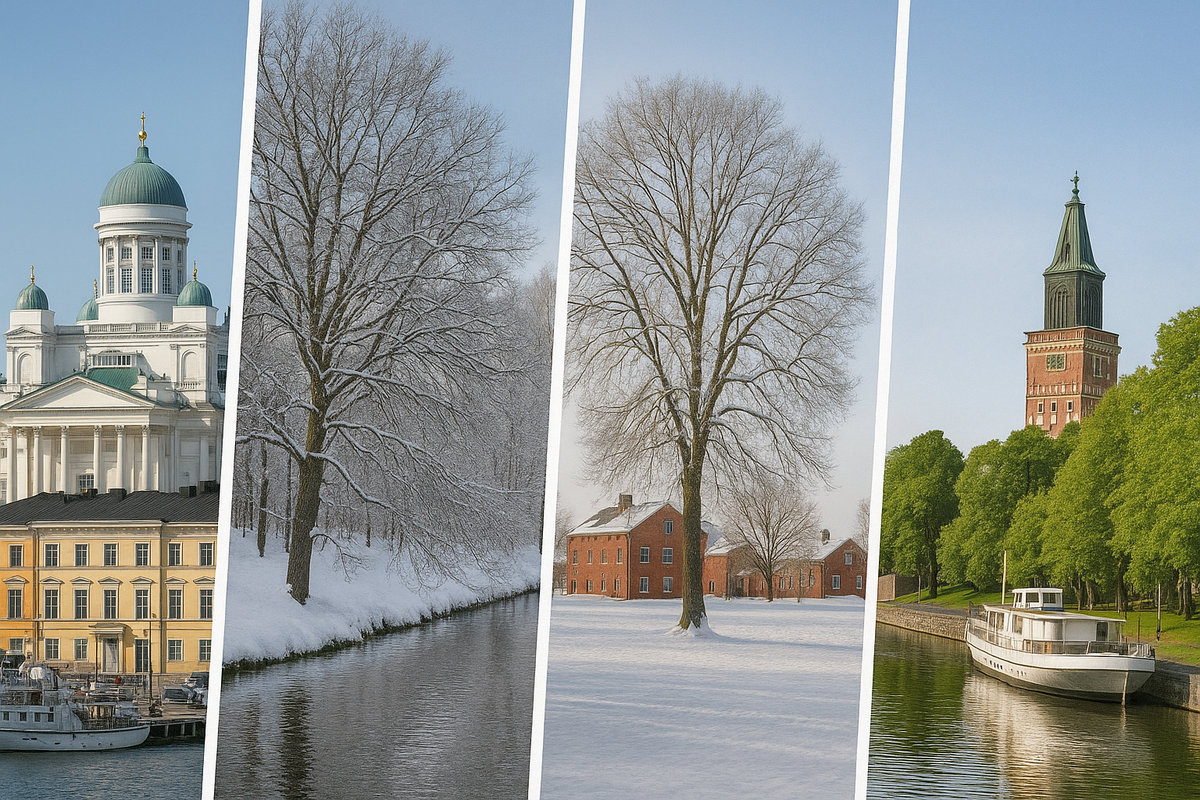
How four cities divide Finland in terms of weather
In textbooks, Finland has a "cold temperate climate". In reality, it's more interesting: in the south-west, there are sea breezes and frequent thaws; in the centre, there are more drastic temperature swings; and in the north, there is an almost Lapland-like winter with steady snowfall.
According to average climate data for the last decade:
● In Helsinki and Turku, the warmest month is July, with daytime highs of around +20...+21 °C and night-time lows of around +12...+13 °C.
● In Tampere and Oulu, July is also the warmest month, but the nights are slightly cooler, with average temperatures around +10...+12 °C.
● The coldest period is late January to February: in Helsinki and Turku, the average temperatures are around –4...–2 °C, in Tampere –6...–5 °C, and in Oulu often –10 °C and below at night.
The cities are quite similar in terms of precipitation: the maximum amount of rain and thunderstorms usually occurs in July–August, and the minimum in March–April. But the difference in how it feels is significant: in some places it is a "drizzle in the wind", and in others it is a short, heavy downpour followed by sunshine again.
The figures help you not to be "scared" of the weather, but to choose what suits you best: for some, a mild maritime winter is more important, for others — stable snow and sun, and for others — a moderate summer without +35 °C.
Helsinki: sea, wind and mild winters
Helsinki is the Baltic Sea, open skies and wind, which changes your perception more than the numbers in the forecast. In winter, it is often -2 °C on the thermometer and feels like -8 °C at the tram stop: the humid air and draughts near the water do their job. The classic picture: snow falls, melts, turns to slush, and falls again.
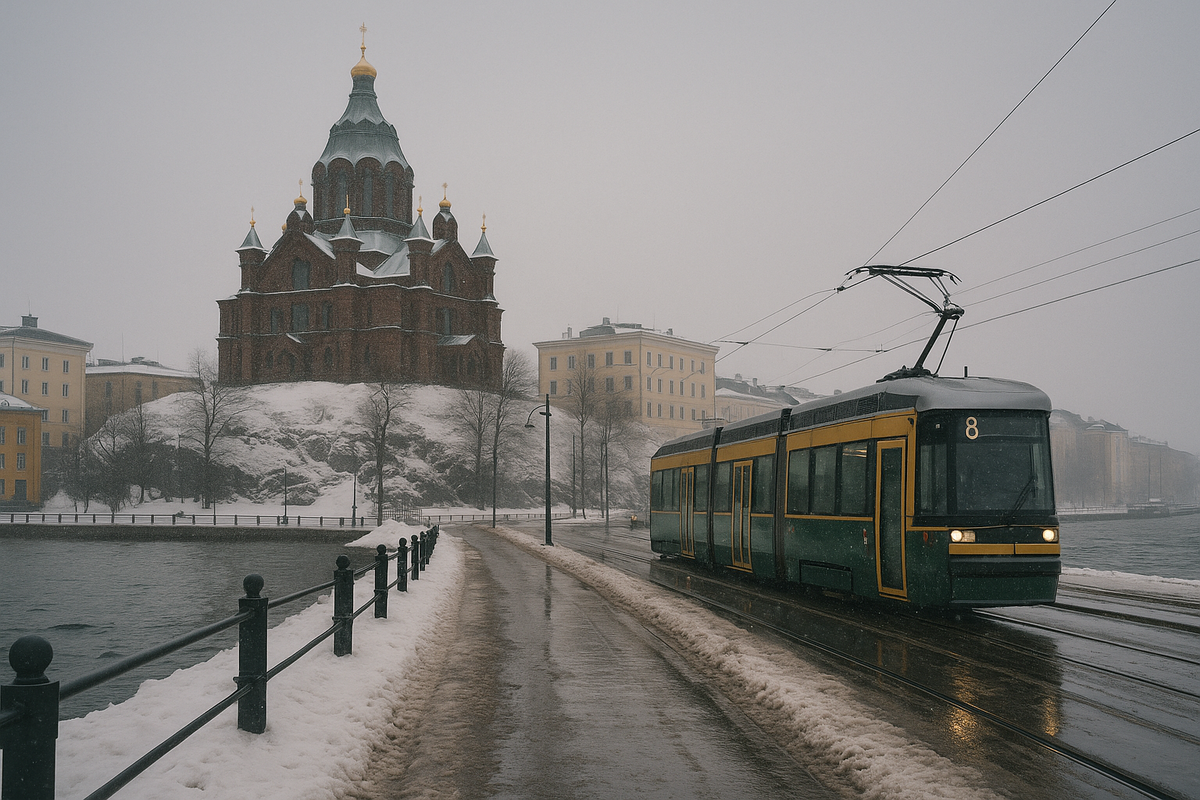
The weather in Helsinki in winter is usually like this:
● December is grey and wet, with an average temperature of around 0...-1 °C and short daylight hours;
● January–February — colder (often –5...–7 °C at night), but with a slightly better chance of "real" snow and rare clear days;
● March is still almost winter, but daylight hours are rapidly increasing, and the feel of the city is changing.
In spring, Helsinki blossoms not because of the temperature, but because of the light. April is one of the driest months, with daytime temperatures of +5...+10 °C, but in the evenings you still need a warm layer and a hat. May is the month when people are already sitting on terraces without gloves, even though summer is still far away according to the calendar.
Summer in the capital is mild: July averages around +21 °C during the day and +13 °C at night, with some days reaching +27...+28 °C, but these are rather exceptions. It is important to understand that August is the wettest month: rain and thunderstorms occur most often, but by this time the sea has warmed up to about +13 °C — the maximum for the Baltic Sea in these latitudes.
Autumn comes quickly: by the end of September, evenings are already +5 °C, in October there is the first wet snow, and in November there is rain, wind and short days. If you are not a fan of the "dark grey" season, try to avoid the second half of November.
Arriving in Helsinki in winter wearing a "minus ten, but dry" jacket from a continental city. At the same temperatures, the humid sea air feels much colder — wind protection and good gloves will save you.
To sum up, Helsinki is a city for layers of clothing and a plan B in case of wind: cafés, museums, public saunas, indoor markets. March (when the sun is out and there is less ice on the pavements) and June–early July are ideal for walks along the water.
Turku: the mildest coast and early spring
Turku is often underestimated: it is perceived as "just another southern city," but it feels like a slightly milder and sunnier version of the capital. The climate here is also maritime, but protected by the archipelago, so the temperature swings are slightly less extreme, and spring often arrives a week or two earlier than in Helsinki.
In winter, Turku behaves similarly: around -3...-4 °C in February, thaws, wet snow, black ice. But thanks to its location in the south-west, small warm spells sometimes arrive here first, and the first "spring-like warm" +7...+10 °C in March-April.
Summer in Turku is all about light and water. July brings average temperatures of +20...+21 °C, and on warm days the air can rise above +25 °C, especially in the city centre and on the sunny embankments. In August, the sea is at its warmest, and the amount of precipitation is one of the highest in the year — but this hardly spoils the atmosphere: a short shower, and you are back walking along the stone streets to the ferry to the archipelago.
Autumn in Turku is milder than in central Finland: the leaves turn yellow over the Aura River, fog is common, but the temperature does not drop as sharply. If you don't want too harsh a winter but dream of a "real" northern autumn, Turku is a good compromise.
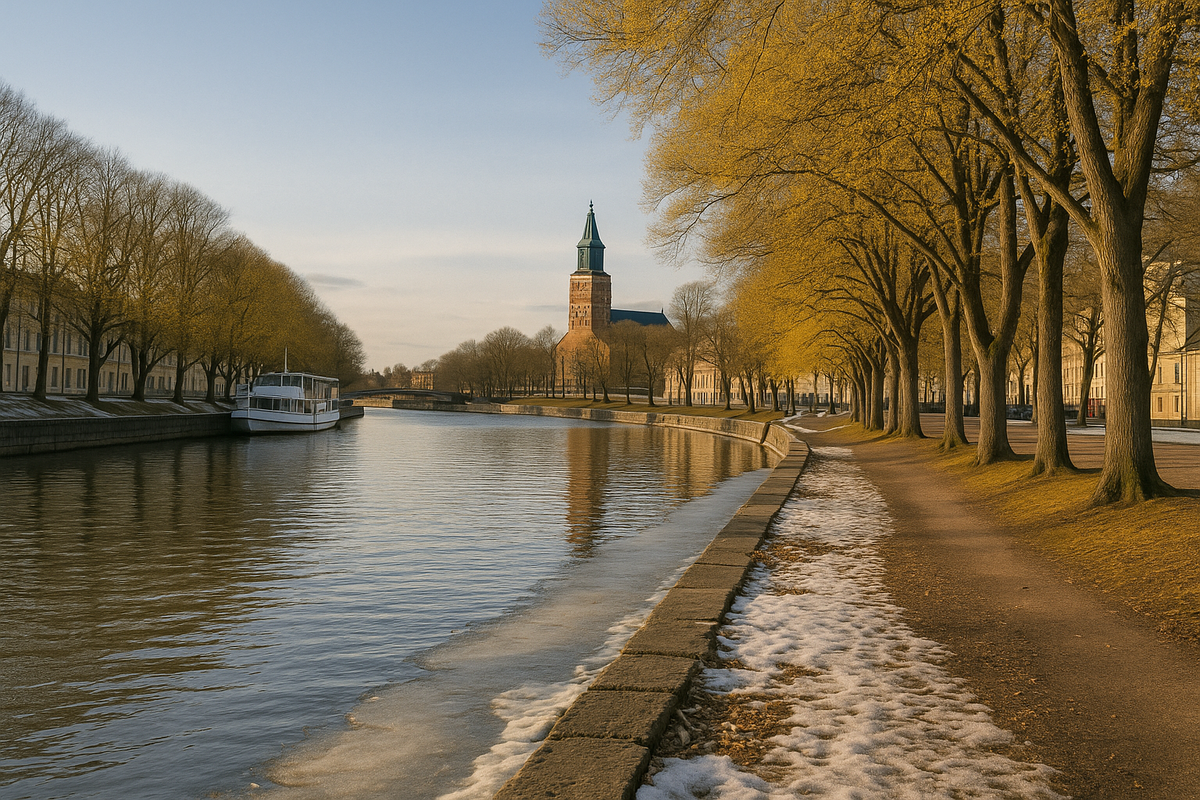
For those planning a combined itinerary, Turku is convenient as a "maritime" point: from here, it is easy to travel to the islands or further to Sweden, and in terms of weather, you will hardly lose out to Helsinki.
Tampere: an honest continental centre
Tampere is often described in one word — "real". There is no sea above the city, it is surrounded by lakes and forests, it is colder in winter, the snow lies longer, and in summer the thunderstorms sound louder . This is closer to an inland, more continental climate: less sea moisture, more stable frosts.
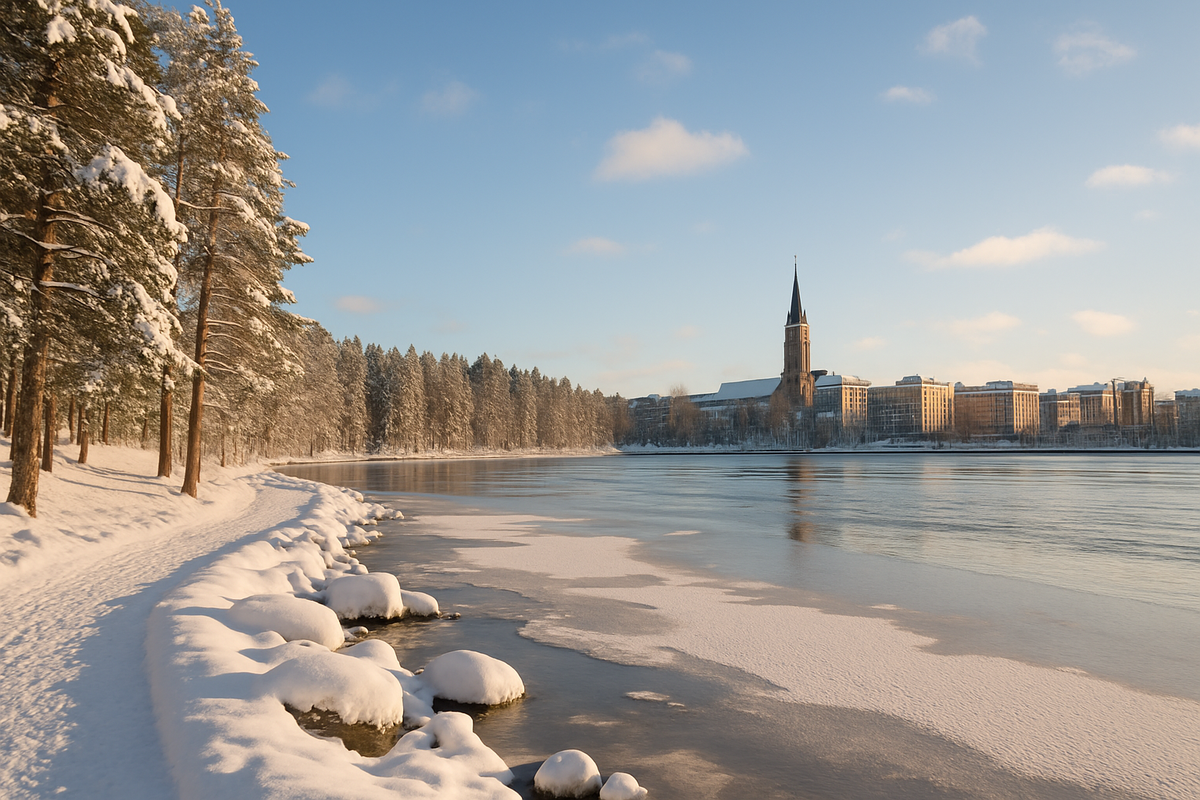
Winter in Tampere feels different than in Helsinki. In February, the average temperature is around –6...–5 °C, with nights of –15 °C not uncommon, but the snow is usually white, dry and does not turn into slush underfoot every other day. March here is one of the most pleasant winter-spring months: officially it is still winter, but the days are already long, the sky is often clear, and there is less precipitation than at any other time of the year.
In summer, Tampere offers the perfect balance: +20 °C during the day, cool nights, lots of greenery and lake swimming. Due to the terrain and moisture from the lakes, showers here can be more intense than on the coast, especially in July (the wettest month), but they pass quickly, and after the rain, the city literally shines.
Autumn is golden, with long walks along the lakes and fresh air; October is already cool, but still cosy in its own way. If you want a more "wintery winter" and "autumnal autumn" than on the coast, Tampere may be the perfect choice.
"We moved from Helsinki to Tampere, and the first thing we noticed was that winter had become 'real'. In the capital, children were skating on puddles, but here in March there are still excellent slopes and lots of sunshine. It's colder, yes, but it feels even more pleasant."
Tampere is a good choice if you want to experience a "real" dry winter while staying in an urban environment with theatres, cafés and a very convenient rail network to all destinations.
Oulu: a northern city by the sea
Oulu is often called the "gateway to the north". Formally, it is not yet Lapland, but it feels like winter here is already quite Arctic: long snowy months, steady frost and a much longer period of white cover than in southern cities.
Oulu's climate is like this all year round:
● the winter period with steady sub-zero temperatures lasts from late November to mid-March;
● the coldest month is January, when average temperatures easily drop to -10 °C and below, and at night it can be as low as -20 °C;
● March and early April are often sunny, with bright snow and noticeably longer days — the perfect time for walks and trips to the countryside;
● Summer is short but bright: July has maximum temperatures of around +16...+17 °C and very short nights.
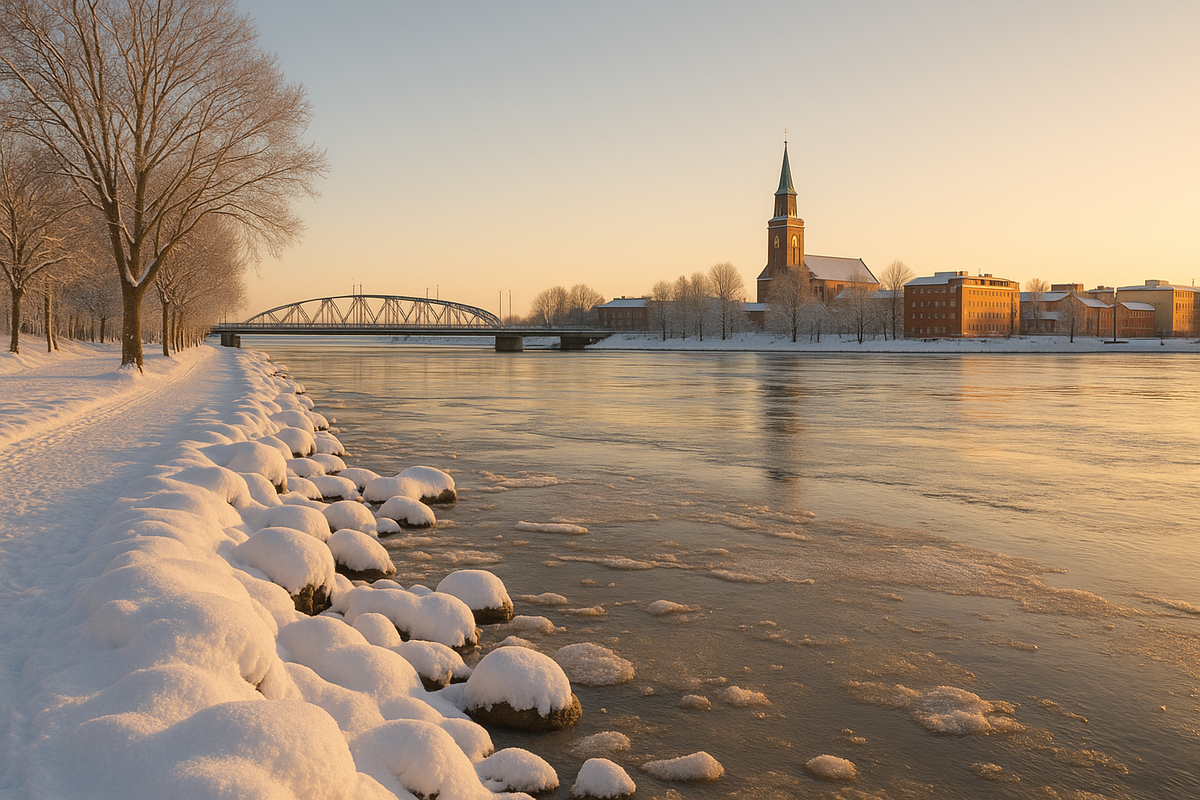
In terms of precipitation, Oulu is not particularly different from other cities: the maximum occurs in July, the minimum in March, but due to the cold in winter, most of the precipitation falls as snow rather than rain.
It is important to understand that in Oulu, you are almost guaranteed to get a "winter picture" in January–February, but the clothing requirements here are different. While in Helsinki and Turku you can get by with a good windproof jacket and layers, in Oulu you need a full winter outfit — especially if you want to walk for a long time, and not just from the bus to the shopping centre.
Seasonal comparison: which month feels best where
If we look not at the bare figures, but at "human scenarios", the cities rank as follows:
● For a mild start to winter, head south to Helsinki and Turku, where there are more thaws and the temperatures are not as harsh (but there is more slush).
● For a "picture-perfect" winter with steady snowfall — Tampere and Oulu, especially in February–March.
● For a summer city break — Helsinki and Turku (coffee shops, the sea, festivals).
● For long, light evenings and a taste of the "northern summer" — Tampere and Oulu.
If you have already read our longread about the best time to visit Finland in winter, then this section can be considered a continuation — only now we are linking the months not to an abstract "country" but to specific cities and their character.
What to bring: a basic weather checklist
How you feel about a city depends 50% on what you are wearing. At the same -5 °C, you can either enjoy the deserted embankment in Oulu or dream of being at home if you arrived in an autumn coat.
For winter city trips (especially if you are planning to travel to Finland in winter and are not limiting yourself to Helsinki), the basic kit looks like this:
● layering: thermal underwear + a warm layer + a windproof jacket;
● a good hat and a buff/scarf that covers your neck and part of your face;
● waterproof shoes with non-slip soles, preferably with studs in case of ice;
● gloves or mittens + thin liner gloves for your phone;
● small backpack for extra layers and a thermos.
For summer, it is not the quantity of items that is important, but their "flexibility": on the same day, you can encounter +24 °C and sunshine or +14 °C with wind and rain. It is better to have a couple of light layers than one overly warm jumper that sits in your backpack all day.
How to make friends with the Finnish climate
Finnish weather is rarely "perfect" by Southern European standards. But if you look at it not as an enemy, but as part of the atmosphere, it starts to work in your favour: fresh air, mild summers without exhausting heat, honest, transparent winters, after which you feel the warmth especially keenly.
The recipe is simple:
● choose a city that suits your temperament (sea, lakes, northern vibe);
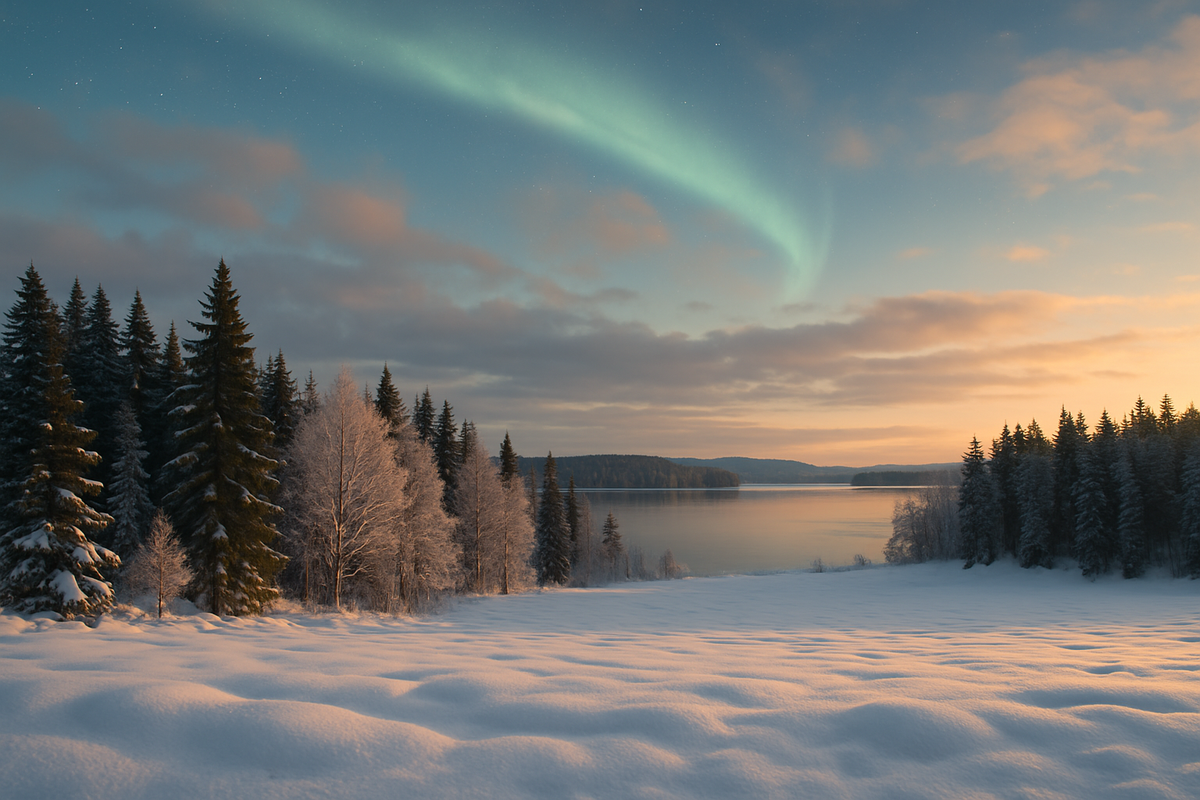
● adjust the date to your interests (snow, aurora borealis, white nights, autumn);
● don't skimp on basic equipment and footwear;
● have a plan B in case of rain or wind — a museum, sauna, cosy café.
Then the weather in Finland's cities ceases to be a lottery and becomes a conscious choice: today you go to see a storm in Helsinki, tomorrow — the sunset over the lake in Tampere, in a year — the March sun in Oulu.
If you found this article helpful, bookmark it, share it with friends who are planning a trip, and tell us in the comments how you personally remember Helsinki, Turku, Tampere or Oulu at different times of the year. Your stories are the best material for future guides.
❓ FAQ
Helsinki has milder and windier winters: there are many thaws, slush and humid air, which makes even slight sub-zero temperatures feel very cold. In Oulu, the frosts are more stable and lower, the snow lies longer and is drier, but there are more clear days. In terms of how it feels, Helsinki is "sea cold" and Oulu is "real winter".
If you want almost guaranteed snow and a real winter, look towards Tampere and Oulu. There, the frosts in January are more reliable, and the snow cover rarely disappears. In Helsinki and Turku, on the same dates, you can encounter both winter and wet, grey November — it's a lottery.
Everyone gets summer showers, but according to statistics, the peak of precipitation in both cities is in July. On the coast in Turku, sea rains and thunderstorms are more common, while in Tampere, showers can be more intense due to the lakes and terrain. In both cities, the rain usually passes quickly, and the sun comes out again afterwards.
Yes, the wind is one of the main factors that distinguishes the capital from inland cities. Even when the temperature is just below freezing, the gusty wind from the bay makes it feel much colder. Therefore, a windproof jacket and a good scarf are more important for Helsinki than "the warmest down jacket in the world".
Turku is the first to feel spring: by the end of April, the embankments are often dry and sunny. Helsinki lags behind by a week or two, and Tampere by about another week. In Oulu, spring only really arrives in May, but after that, the snow melts quickly.
In terms of average temperatures, Helsinki and Turku are slightly warmer, especially in the evenings and thanks to the sea. Tampere and Oulu also offer comfortable +20 °C in summer, but the nights there are noticeably cooler, especially near the lakes. For a beach holiday, it is better to choose the south, and for walks and activities, any of the four cities.
Theoretically, yes: Oulu is far enough north that, with a good forecast, the aurora can appear above the horizon. However, city lights and cloud cover can interfere, so for a guaranteed show, it is better to travel a little further north. Oulu is more of a "pleasant bonus" than the main destination of the trip.
Think in layers: thermal underwear, a warm middle layer and good wind and moisture protection on top. Wind and slush are critical in Helsinki and Turku, while steady frost is critical in Tampere and Oulu. It is important to wear non-slip shoes and, if possible, light studs on the soles — pavements can be very slippery.
The railways in Finland are well adapted to winter, and trains run quite reliably. There may be minor delays due to snow or wind, but major disruptions are rare. Buses and the city network also adapt to the season, so you can travel with peace of mind, just allow a little extra time.
Yes, but this is "northern swimming": the sea near Helsinki and Turku warms up to about +13...+18 °C in August, and the lakes in Tampere and the Oulu area are slightly warmer. Locals start the swimming season much earlier than tourists would consider normal. If you want comfortable water temperatures, aim for late July to August and choose lakes.
Each in its own way, but the "golden autumn" is best felt in Tampere and Oulu: the surrounding forests and lakes light up with all shades of yellow and red. In Turku and Helsinki, autumn is milder and longer, but there are beautiful misty mornings and bright sunsets over the sea. It all depends on whether you prefer forests or water.
Helsinki is the most popular choice for a first visit, as it combines the sea, architecture, museums and a familiar climate. If you want a slightly warmer and more intimate coastline, you can start with Turku. For those who are immediately drawn to lakes and a more "real" winter, it makes sense to look towards Tampere and leave Oulu for when you have already made friends with the north.

0 comments
Log in to leave a comment