



🚫 Finnish souvenirs that EVERYONE regrets buying: an honest guide to ‘what not to buy’
Finland knows how to charm you quickly — too quickly.
First, you're just walking around the quiet centre of Helsinki, looking at the soft winter light, popping into a souvenir shop ‘for a minute’...
And then suddenly you're standing at the airport counter, looking at your shopping bag and thinking: ‘Why did I buy THIS? And why does it cost as much as half a train ticket to Lapland?..’

Believe me, you're not alone.
Every winter, hundreds of tourists return home with the same feeling:
some souvenirs are a joy, while others are, frankly, just disappointing. Even worse is when the gift makes the recipient feel awkward.
That's why we've created this honest, warm and slightly cheeky guide — so you don't repeat other people's mistakes. Here we've gathered everything that travellers most often discuss on Reddit, at airports, in reviews and on Finnish blogs:
— which purchases break after a week;
— what only looks good in the shop window; — what Finns themselves call a ‘cultural fail’;
— which “Arctic” products are just marketing;
— and what is better to take instead of these dubious souvenirs.
And yes, along the way, we will carefully mark ‘bridges’ to other SuomiGuide materials — for example, to Finnish supermarkets, the best gifts from Lapland, sauna culture, Helsinki design shops, New Year's etiquette and real expat reviews.
So you can open the right section with one click — and put together the perfect Finnish set that won't gather dust in your closet.
This text is not about ‘not buying anything’.
It's about buying smart, warm, beautifully and honestly.
So that your suitcase is light and your gifts are ones that people open with a smile, not with the question:
‘Oh... what's this?’
Ready?
Then let's start with the main thing — why Finnish souvenirs are so often disappointing, even if the country makes you fall in love at first sight.
🤔 Why Finnish souvenirs are so often disappointing
Sometimes Finland behaves like that calm, warm friend who suddenly slips you... a strange gift.
And you're like, ‘Thanks... I guess?’
It's the same with souvenirs — the country is beautiful, but shopping can be a gamble.
The reason is simple: tourists' expectations and Finnish reality live in parallel universes.
We are looking for the ‘real north’, ‘wooden magic’, ‘Arctic aesthetics’ and ‘the spirit of Lapland’.
But shops sometimes offer plastic, marketing, Chinese knock-offs and goods that Finns themselves would not buy.
To understand why this happens, it is important to understand the four typical traps that tourists fall into.
And yes, each of them is confirmed by comments on Reddit, in Finavia reviews and Finnish blogs.
Before we get into the details, here's a signature SuomiBlock insert for contrast and balance:
“Around 95% of ‘arctic’ souvenirs aren’t actually made in Finland. If authenticity matters to you, always check the label — Lapland magic ≠ a plastic snow globe.”
🎯 Main reasons for disappointment
1) ‘Northern marketing’ that promises miracles
Arctic cosmetics, “northern” candles, ‘icy’ scents — often sound beautiful, but work poorly. That's why we'll refer later to Finland's sauna culture and Finnish cosmetic brands that are really worth the money.
2) Tourist area ≠ Finnish aesthetics
Souvenirs with Santa Claus, plastic Lapland symbols and magnets are sold because ‘you have to buy something.’
Finns don't buy these things.
They go to designer shops in Helsinki or Finnish supermarkets for delicacies and real trinkets.
3) Fragility: half of the souvenirs won't survive the journey
Glass, clay, cheap wood — death by vibration. We will return to fragile Finnish decorations that crack during flight.
4) Expectations of the ‘special north’ are too high
You need to look at practicality, durability and honesty of materials — as the Finns themselves do.
If it is plastic, the Finns do not make it.
If it says ‘Lapland’ on it but it's made in China, it's not Lapland.
<div style="border-radius:14px; padding:16px; background:linear-gradient(135deg,#fdf2f8,#fce7f3); border:1px solid rgba(180,60,120,0.25); box-shadow:0 8px 22px rgba(150,30,80,0.12); margin:22px 0;">
<b>💬 Voice of Lapland (from Finnish forums):</b><br>
‘If the price is too low, it's not Sámi handmade. Genuine products are signed by the craftsman and bear his pattern, history and style.’
</div>The next logical step is the most important:
which category of Finnish souvenirs causes the most regret?
And yes, this is a sensitive topic because it concerns the Sami culture.
🪶 Fake Sami handicrafts
Finland knows how to be magical — and this magic is especially vivid in Lapland.
But here's the paradox: it is there that tourists most often make the biggest mistake of winter shopping — they buy a ‘Sami souvenir’ that... is not Sami at all.
This is not just a disappointment.
It is a place where cultural misunderstandings arise, and Finns speak about this openly — and quite sharply.
It is not without reason that we will carefully link this section to Sami culture in Finland, ethical shopping in the North and gifts from Lapland.
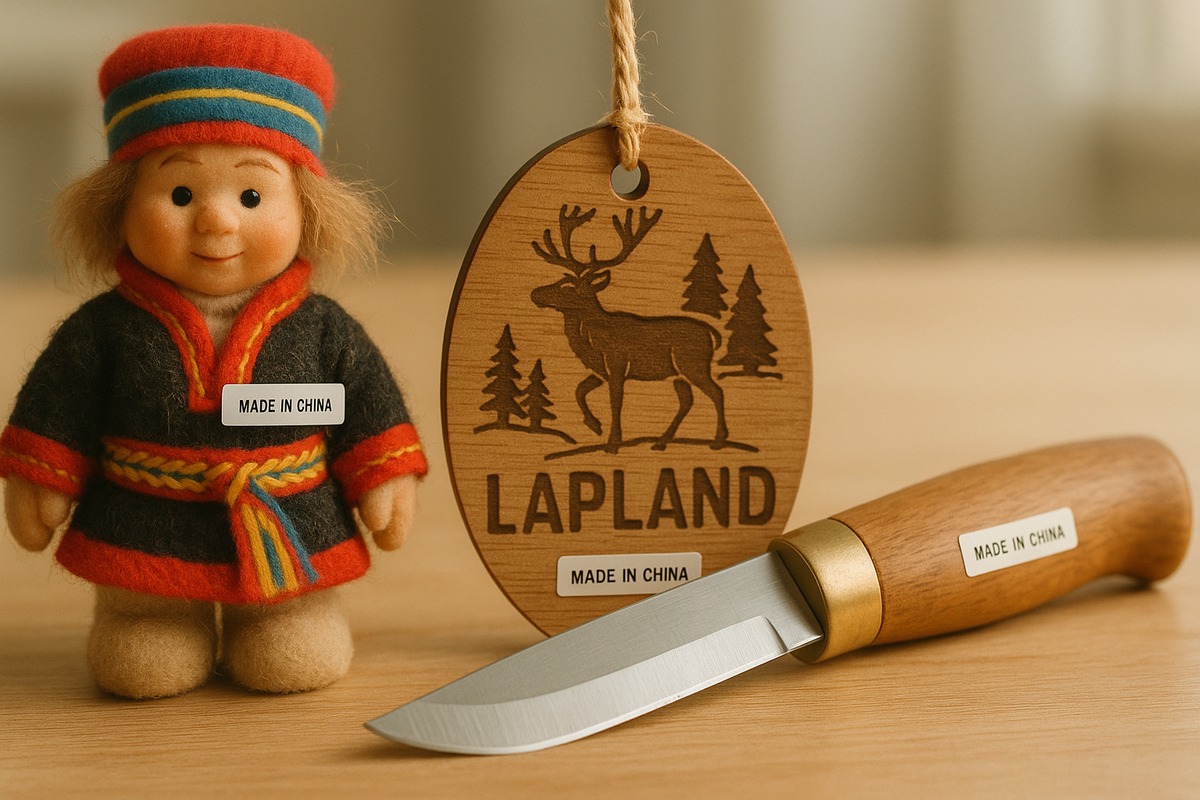
Why is this a problem?
Souvenir shops in Rovaniemi and on the road to Ivalo often sell:
- knives with ‘traditional’ carvings,
- small wooden figurines,
- bracelets with ornaments,
- horn and leather products.
The sign says ‘Sámi style’.
The packaging says ‘Lapland’.
Tourists are delighted.
But in reality:
🔥 80% of these goods are made in factories not in Finland
This is confirmed by both Reddit and Sámi organisations. There are many fakes, and tourists only find out the truth when they get home.
🔥 Genuine Sámi handicrafts are rare, expensive, and unique
This means that, by definition, they cannot cost €15–20.
🔥 By buying a fake, you are not supporting the artisans, but the mass-market factory goods market.
And this is something that Sámi artisans would ask you to avoid.
‘If the price is too low, it's not Sámi handmade. Genuine products are signed by the craftsman and bear his pattern, history and style.’
How to distinguish genuine Sámi craft from counterfeits
1) The product always bears the signature of the craftsman or the name of the workshop
Sámi craft is not a mass market.
It is a surname, a style, a tradition.
2) Materials — honest
Horn, birch, leather, wool. No plastic, no ‘camouflage wood’.
3) The pattern is not chaotic, but symbolic
Sámi ornaments always have meaning.
Factory-made ‘Sámi-style’ ornaments are just patterns.
4) Price is the main filter
If a product costs as much as a cup of coffee, then it is worth a cup of coffee.
— there is a signature from the craftsman;
— the origin of the materials is indicated;
— there are no words such as ‘style’, “inspired”, ‘Lapland souvenir’;
— the seller can tell you who made the item;
— the price is not laughable.
Where to buy authentic items
If you want to bring back something meaningful, the Finns recommend:
- Sámi Duodji Shops
- Arctic handicraft co-ops in Ivalo, Inari and Utsjoki
- special selected sections in Lapland museums
- certified workshops that are approved by the Sámi communities
This is where you can buy something truly valuable — something that will last a long time and won't fall apart before your eyes.
There are things that look so warm that you want to grab them right away — like hot cocoa in the frost. Kuksa is just such a souvenir.
It is beautiful, warm, ‘truly northern’ and looks perfect on Instagram.
But... almost all tourists return home with the same story:
— ‘It cracked.’
— ‘It turned a strange colour.’
— ‘It filled my whole suitcase with the smell of varnish.’ .
‘It broke after the first cup of tea.’
And it's not Finland's fault.
It's the fault of mass production — and a lack of understanding of how a real kuksa differs from a cheap copy.
And yes, we associate this block with gifts from Lapland, forest crafts of the North and the ethics of buying wooden products.
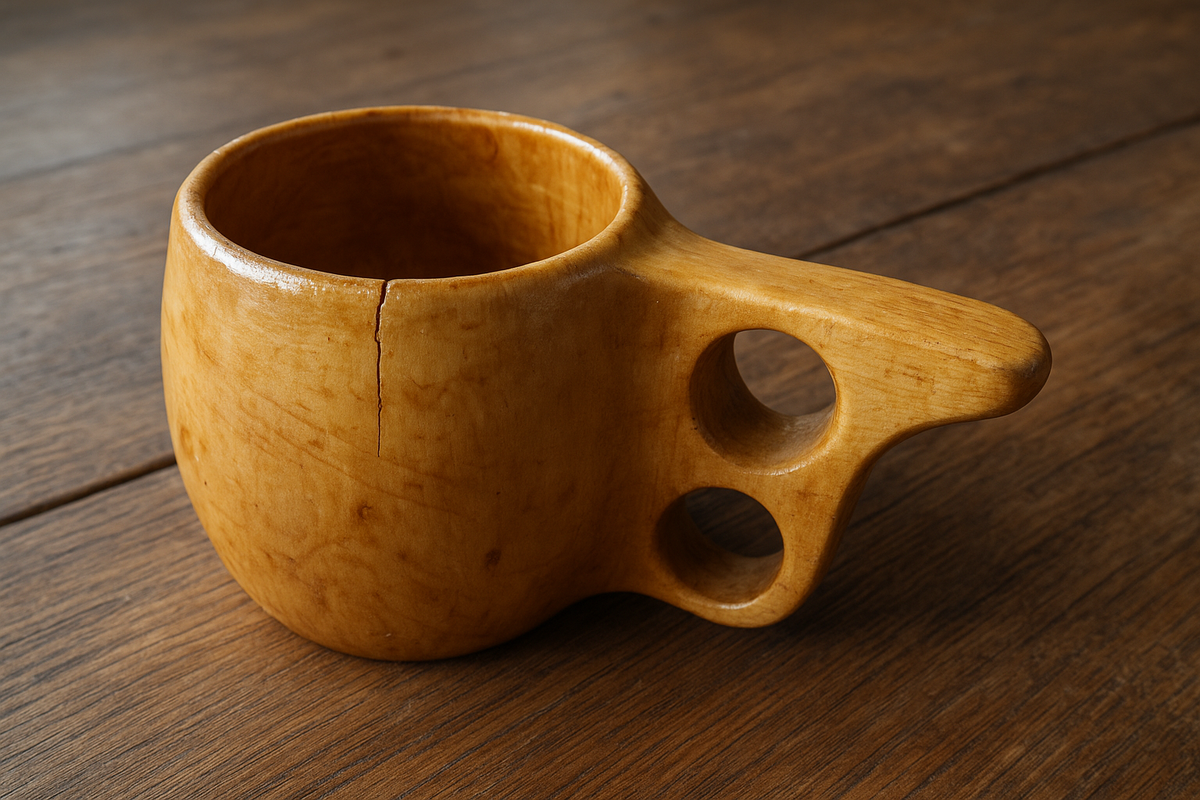
Why cheap kuksas are a disaster
1) They are made of soft wood that cracks when exposed to boiling water
Factories save money on the type of wood.
A real kuksa is carved from birch bark — dense, heavy, with a beautiful pattern. Bark can withstand temperature, impact, and transitions from cold to heat.
Soft wood cannot.
2) They are coated with varnish or chemicals
A natural kuksa is never varnished.
It is impregnated with:
- oil,
- salt,
- coffee,
- or a mixture that the craftsmen keep secret.
Varnish gives shine...
and completely ruins the taste of the drink.
3) They cannot be used for hot tea and coffee
Tourists think they can.
Sellers remain silent.
A kuksa made of soft wood ‘leads’, it darkens, warps, and cracks.
4) They are almost always Made in China or do not have the craftsman's signature
That is, they have nothing to do with the northern tradition.
1) If the kuksa shines, it is varnished. Real ones do not shine.
2) If it is light, the wood is weak.
3) If it costs less than €35–40, it is not a birch cup.
4) If there is no craftsman's signature, it is a souvenir, not a craft.
What a real kuksa looks like
It doesn't scream for attention.
It is slightly matte, heavy, with a dense grain pattern.
When you pick it up, you can feel its ‘northern warm roughness’.
A real kuksa:
- is carved by hand,
- is impregnated with natural compounds,
- will withstand years of hiking, frost and coffee by the campfire,
- always has the craftsman's signature.
And yes, tourists often buy exactly these in small workshops in Lapland, Arctic cooperatives and museum shops — but never in tourist rows.
Arctic handicraft shops in Inari and Utsjoki
Sámi Duodji cooperatives
Shops at the Karelia and Lapland museums
Artisans' workshops listed in the ***guide to northern crafts***
What about other wooden souvenirs?
🎣 Small animal figurines
Often made from the same soft wood → they break in your suitcase.
🪶 Decorative spoons, bowls, plates
If they shine, they are varnished.
If they smell like chemicals, walk away.
🪵 Traditional ‘kauha’ spoons
They're nice, but don't buy the cheapest ones — they won't survive the humidity.
🎁 Useless “tourist” souvenirs
There are things that are the same in every country — bright, cheap, ‘cute’... and deeply useless. Finland is no exception.
Tourists continue to buy them every year, and then write on Reddit:
‘Why did I buy this?’
To help you avoid repeating their mistakes, we've compiled an honest anti-top list.
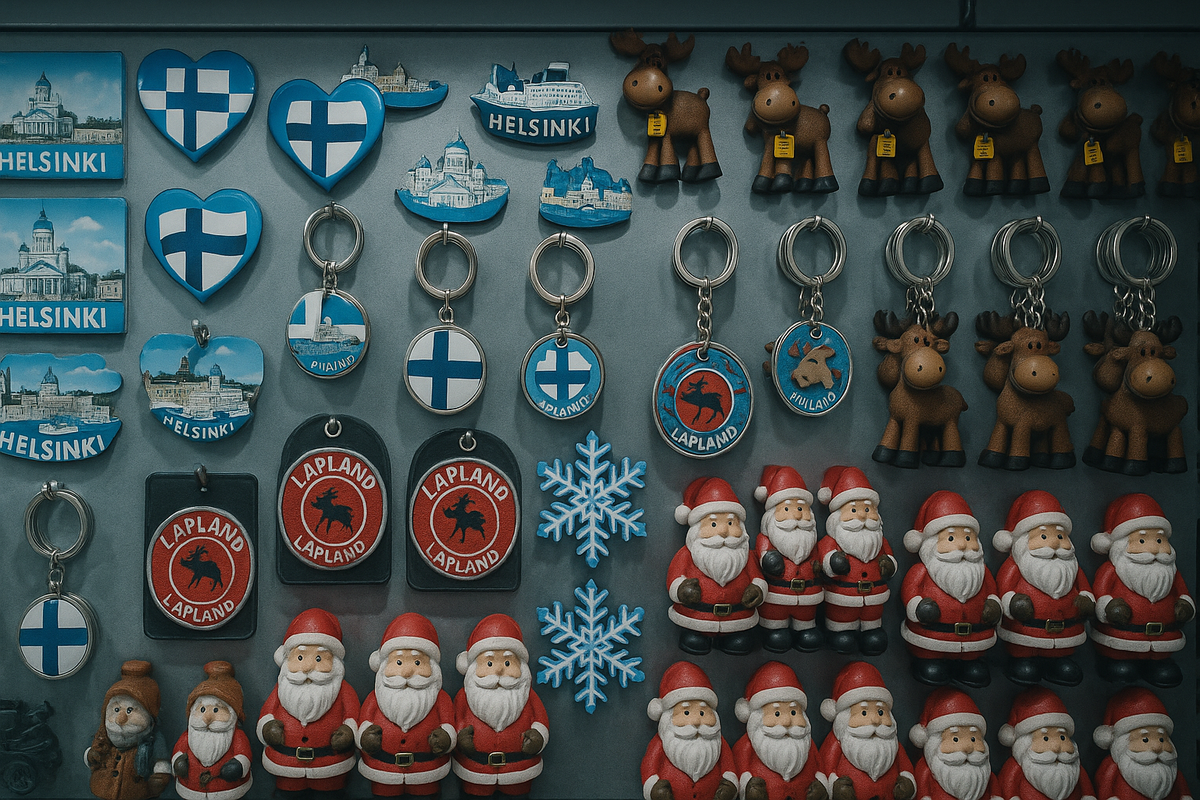
🎅 1) Magnets, key rings, plastic ‘Santa-kitсh’
Yes, they're cheap.
Yes, they're convenient.
Yes, they're everywhere.
But:
- the magnets peel off after a month;
- the key rings break after a week;
- the plastic Santa is not from Finland, but China.
Finns don't buy such ‘symbols’.
And that's why we'll link this point to real Finnish Christmas traditions and souvenirs from Lapland that really make sense.
“The worst gift was a keychain with ‘Santa from Rovaniemi’. It broke on the way home. I only bought it so I’d have ‘something’.”
🧵 2) Cheap printed textiles
Aprons, towels, ‘I ❤️ Lapland’ bags, acrylic gloves...
Surprise: none of these can withstand the Finnish winter.
These items:
- lose their shape,
- shrink,
- tear,
- shrink after the first wash.
Finns buy textiles in the categories of Finnish design, Helsinki home aesthetics or Marimekko — where you get both quality and style.
🎩 3) 100% acrylic hats and scarves
They look ‘northern’, but they don't keep you warm at all. A temperature of −5 feels like −12 in Finnish, and such a gift becomes a joke.
🕯️ Weak candles and ‘Arctic cosmetics’
The next sore subject of winter shopping.
Something that looks premium, smells nice, is expensive — and then... disappears.
🕯️ 1) Candles that ‘smell like nothing’
Finns love minimalism.
Candles here are about atmosphere, not scent.
That's why most scented candles:
- give off a faint scent,
- burn quickly,
- are illogically expensive (€20–45).
If you want a candle that really smells, look for:
- Nuuk Nordic,
- Puro Nordic,
- local candle workshops.
‘If you can't smell it through the closed jar, it won't be in your home either.’
❄️ 2) ‘Arctic cosmetics’ that don't work
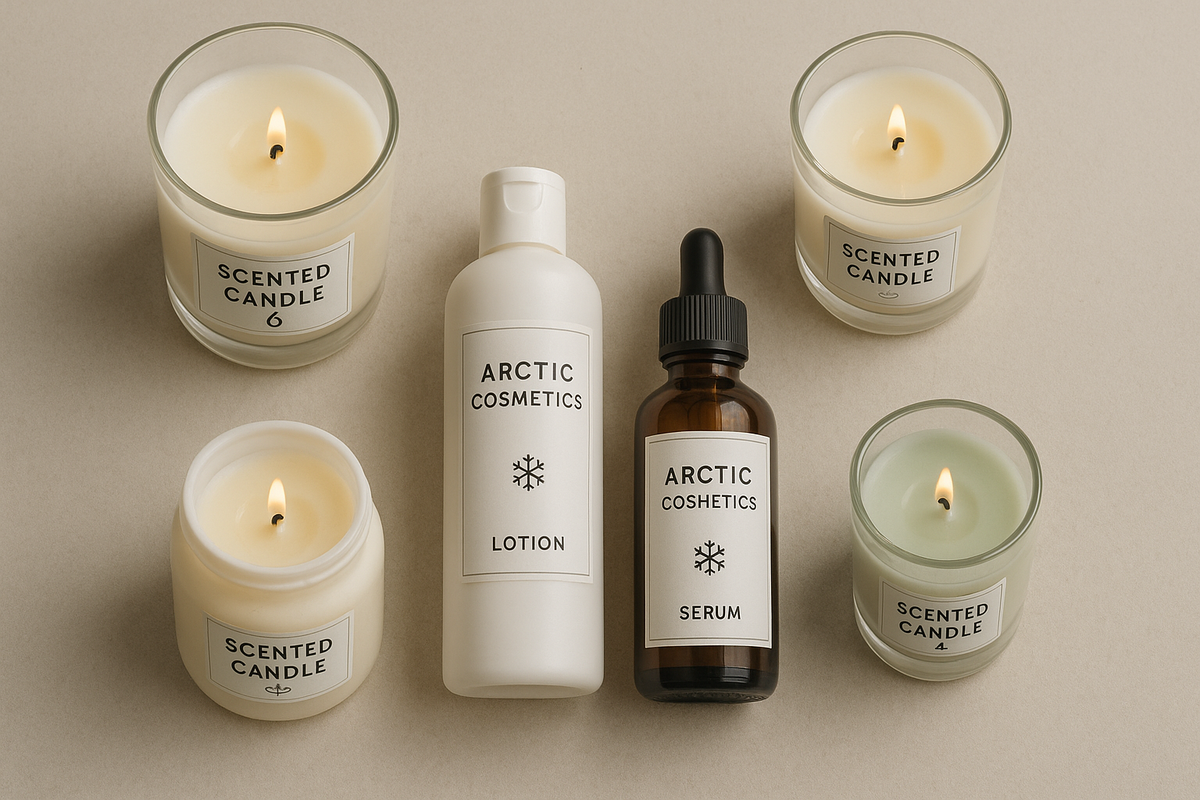
Marketing: icy water, cloud extract, northern lights in a jar.
Reality: light textures, ‘almost no’ effect.
There are exceptions:
Lumene, Frantsila, Supermood — brands that Finns really love.
They will be included in our guide to Finnish cosmetics, where we will reveal everything honestly.
🦌 Souvenirs made from reindeer antlers and leather
These items look beautiful and ‘northern’.
But one thing is important here: ethics.
When such products are appropriate
- When they are handmade.
- When they are signed by the craftsman.
- When the seller can explain the origin of the material.
When they are not
- When it is a cheap ‘Lapland style’ souvenir.
- When the material is not specified.
- When the product is factory-made.
Finns are very sensitive to nature and tradition.
Therefore, we always associate horn souvenirs with ethical purchasing and Sami craftsmanship — to avoid any misunderstandings.
❄️ Fragile glass decorations and snow globes
Beautiful → yes.
Finnish → yes.
Will survive the flight → almost never.
Why they break
- The glass is thin,
- water expands with temperature,
- the glue joints are weak,
- and suitcases are not forgiving of romanticism.
‘If you really want a glass souvenir, buy it at the end of your trip and carry it in your hand luggage.’
✈️ What NOT to buy at Helsinki and Rovaniemi airports
Finland's airports are among the best in Europe, but they do have their weak points. Here is an honest review based on Finavia and tourist reviews.
What NOT to buy at HEL (Helsinki):
- Overpriced cosmetic ‘gift sets’,
- cheap candles,
- plastic ‘Lapland’ souvenirs,
- magnets and key rings.
What NOT to buy at RVN (Rovaniemi):
- unmarked horn sets,
- cheap ‘sauna style’ hats,
- ‘northern lights in a bottle’.
💡 What to buy instead
It is important for us not just to ‘prohibit’ but to offer good alternatives.
And the Finns exceed expectations here.
🎁 Best alternatives
- Finnish sweets and coffee (Prisma, K-Citymarket)
- textiles and tableware (Marimekko, Iittala, Arabia)
- sauna accessories (broom, ladle, towel)
- home decor in the ‘little Helsinki’ style
- Finnish board games (Tactic Games)
- Local cosmetics brands (Lumene, Frantsila)
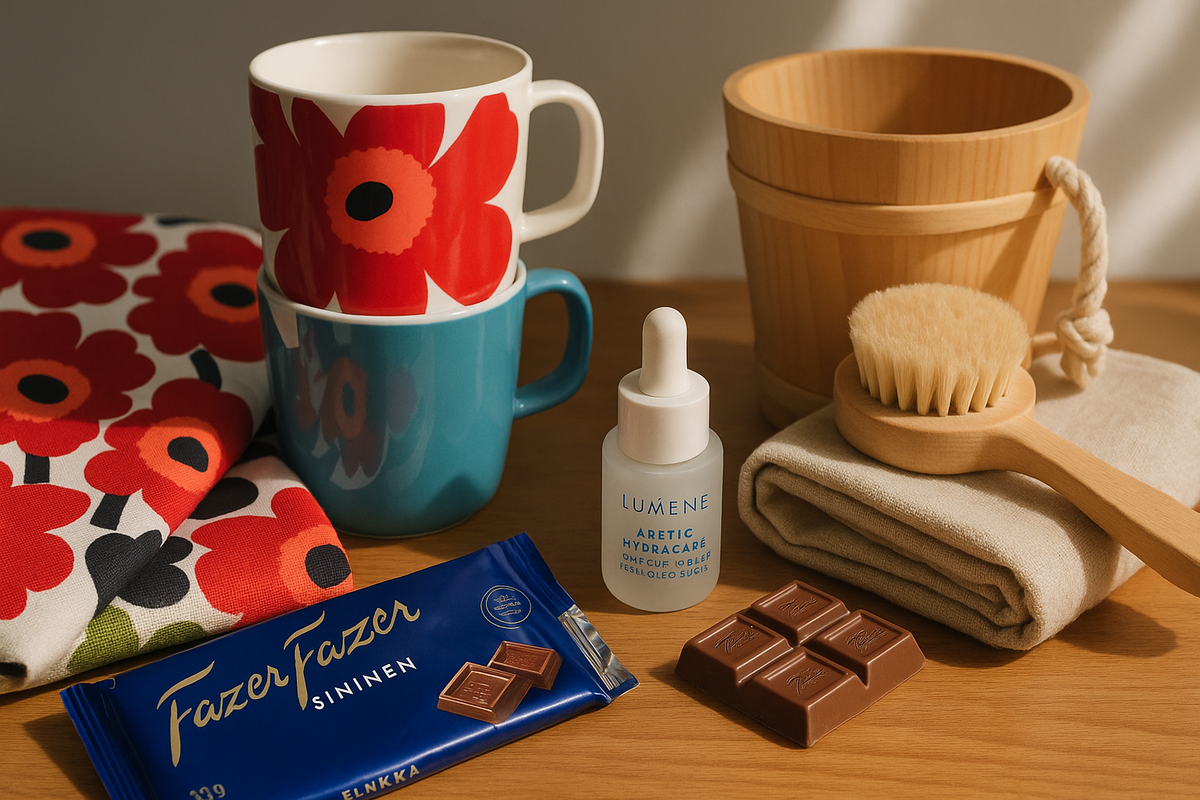
— it has the maker’s or brand’s signature;
— the materials are honest and understandable;
— made in Finland or Scandinavia;
— will survive your suitcase;
— useful in real life, not just “cute”.
-
Lacquered kuksa and ultra-light wooden mugs that are “handmade” and cost 10–15 euro – they crack, smell like chemicals and have nothing to do with real Lapland.
-
Fake Sámi style: “Sámi” amulets, cheap drums and “shamanic” souvenirs without a craftsperson’s signature — cultural fail, not support for local artisans.
-
Lapland kitsch: plastic Santas, gnomes and reindeer that look like seasonal discount-bin items, not Finland.
-
Acrylic hoodies and hats with “I ❤️ Finland” – they lose shape quickly, don’t keep you warm and most people feel awkward wearing them after one photo.
-
Cheap magnets and keychains made from thin plastic — they peel, break and carry zero Finnish character beyond the printed word “Finland”.
-
Scentless “Arctic” candles and gift sets with loud names – nice packaging, almost no actual scent at home.
-
Cosmetics marketed as “Nordic/Arctic” without a real brand or reputation — you pay for the box and the buzzword, not for skin care quality.
-
Fragile glass: snow globes, thin vases and candle holders — high chance they won’t survive flights and baggage handling.
-
Airport gift boxes with sweets and cookies at triple the supermarket price — you overpay for the box and the word “Finland”.
-
Fragile “children’s” souvenirs (porcelain, mini figures, snow globes) – adults love them, but they’re completely impractical as toys.
-
Finnish coffee and chocolate (Paulig, Fazer, berry editions) — universal edible gifts that don’t get stuck in a cupboard for years.
-
Authentic kuksa made from birch burl: heavy, matte, signed by the maker — a memory that can last for years if treated right.
-
Genuine Sámi handicrafts (Sámi Duodji): horn, wood, wool, jewellery and textiles with real patterns and stories behind them.
-
Sauna essentials: ladles, birch whisks, towels, natural oils and bath salts – things Finns actually use at home.
-
Finnish homeware and design (Iittala, Marimekko, Arabia) — dishes, textiles and decor that survive more than one season and feel like “real Finland” on your table.
-
Board games and toys (Tactic, Moomin) — things kids actually play with, not just dust-collecting souvenirs.
-
Scandi-style home decor: candle holders, small vases, minimalist kitchen tools – compact, practical and easy to pack.
-
Natural Finnish cosmetics (e.g. Lumene, Frantsila) — pick by reviews, not just by the word “Arctic” on the label.
-
Supermarket finds (Prisma, K-Citymarket, Lidl): coffee, snacks, sauces, spices, limited editions that are hard to get outside Finland.
-
Warm basics: wool socks, mittens, scarves from local brands – minimal logos, maximum Finnish character.
Take a screenshot or save this block to your notes before the trip. Open it in a souvenir shop, at the airport or in a supermarket — and ask yourself one question: “Is this really Finland, or just the word ‘Finland’ printed on the box?”
🎬 Conclusion: buy with your heart, but think like a Northerner
Finland is not about glitter, noisy shop windows and definitely not about ‘tourist sets for €9.99’ .
Genuine Finnish products are durable and smell of wood, snow and coffee, not plastic and cheap varnish.
If you've read this far, you're already one step closer to bringing home a gift with character, rather than yet another dust-collecting ‘trinket from Rovaniemi’.
If you liked this guide —
❤️ leave a comment (your feedback is important to us),
💾 save it so you don't lose it before your trip,
↪️ share it with those who are going to Helsinki or Lapland,
🧭 or send it to your notes to open directly in the shop.
This helps us create even more honest and useful content — about Finnish culture, travelling in Lapland, Finnish design, saunas and northern gifts without disappointment.
Thank you for reading.
You are part of SuomiGuide. ♥️❄️
❓ FAQ
Because most of the ‘tourist’ goods in Finland are not produced locally, but are purchased from external factories. Magnets, key rings, cheap kuksa, plastic figurines and textiles rarely have anything to do with Finnish culture. Genuine Finnish design, crafts and traditional products are sold elsewhere: in small workshops, design shops, museums and certified shops.
Yes, but only authentic ones, handmade from birch bark. These mugs will last for years, won't crack, and won't affect the taste of your drinks.
Don't buy cheap kuksa made from soft wood, lacquered products, or items without the craftsman's signature. They will break after the first attempt to pour tea or coffee.
Genuine products always have:
- the craftsman's signature or the name of the Sámi Duodji artel,
- high-quality materials (leather, wool, horn, wood),
- symbolic patterns with traditional elements,
- a high price (Sámi handicrafts cannot cost €10–20).
Factory copies are usually cheap, very ‘bright’ and made of plastic or soft wood, with no cultural value.
Glass balls, thin candlesticks, mini-himmes, decorative mugs, cheap wooden figurines.
Glass souvenirs almost never withstand temperature changes and vibrations.
It is best to carry all fragile items in your hand luggage.
Yes. Finns love minimalism and calm scents. Therefore, most ‘Arctic candles’ have a very light scent. For brighter scents, choose local workshops or brands such as Nuuk Nordic, Puro Nordic and Finnish home decor design studios.
Yes, but you need to be sure of their origin.
Ethics are an important part of Finnish culture. Genuine artisans always indicate the material, processing method and provide information about the workshop.
Finns advise avoiding fakes and factory-made ‘Lapland style’ products.
The best options are:
- Moomin toys,
- Tactic board games,
- children's books by Finnish authors,
- Fazer chocolate (especially blue bars),
- small practical items in the style of Finnish supermarkets (gloves, socks, sweets).
- Cheap ‘Arctic’ toys often break.
Textiles and tableware (Marimekko, Iittala, Arabia), high-quality sauna items, handmade wooden products, natural cosmetics, Finnish coffee, chocolate, candles, and Scandinavian interior design items.
All these items can be found in Finnish design shops and Helsinki's home concept stores.
Supermarkets are the best source of practical Finnish gifts:
- Paulig / Löfbergs coffee,
- Fazer chocolate,
- salmiakki of varying levels of ‘strength’,
- Finnish mulled wine spices,
- Arctic snacks,
- Lumene cosmetics.
- They are inexpensive, high quality and Finnish.
Anything that says ‘style’, “inspired”, ‘Lapland souvenir’, ‘Sámi style’, or anything made of plastic, covered with varnish, too light, too shiny, without the craftsman's signature.
If something looks ‘cute’ but flimsy, that's exactly what it will turn out to be.

0 comments
Log in to leave a comment