



💸 Where to Start Your Scandinavia Trip in 2026: Helsinki, Stockholm, Oslo or Copenhagen — The Ultimate Test of Prices, Comfort and Your Nerves
Where to start your acquaintance with Scandinavia
If you are planning your first trip to Scandinavia, it quickly boils down to four names: Helsinki, Stockholm, Oslo, Copenhagen. On route maps, TikTok, and in travel guides, they are almost always grouped together. But in practice, they are four different realities — in terms of prices, atmosphere, nature, rhythm, and even how you drink your morning coffee.
In this article, you will learn Helsinki Stockholm Oslo Copenhagen what to choose if:
- you only have 3-4 days and one plane ticket;
- your budget is limited, but you want to experience the real thing, not just a quick tour;
- you want to understand how much the northern tranquillity, wind, water and slightly harsh humour of the locals appeal to you.
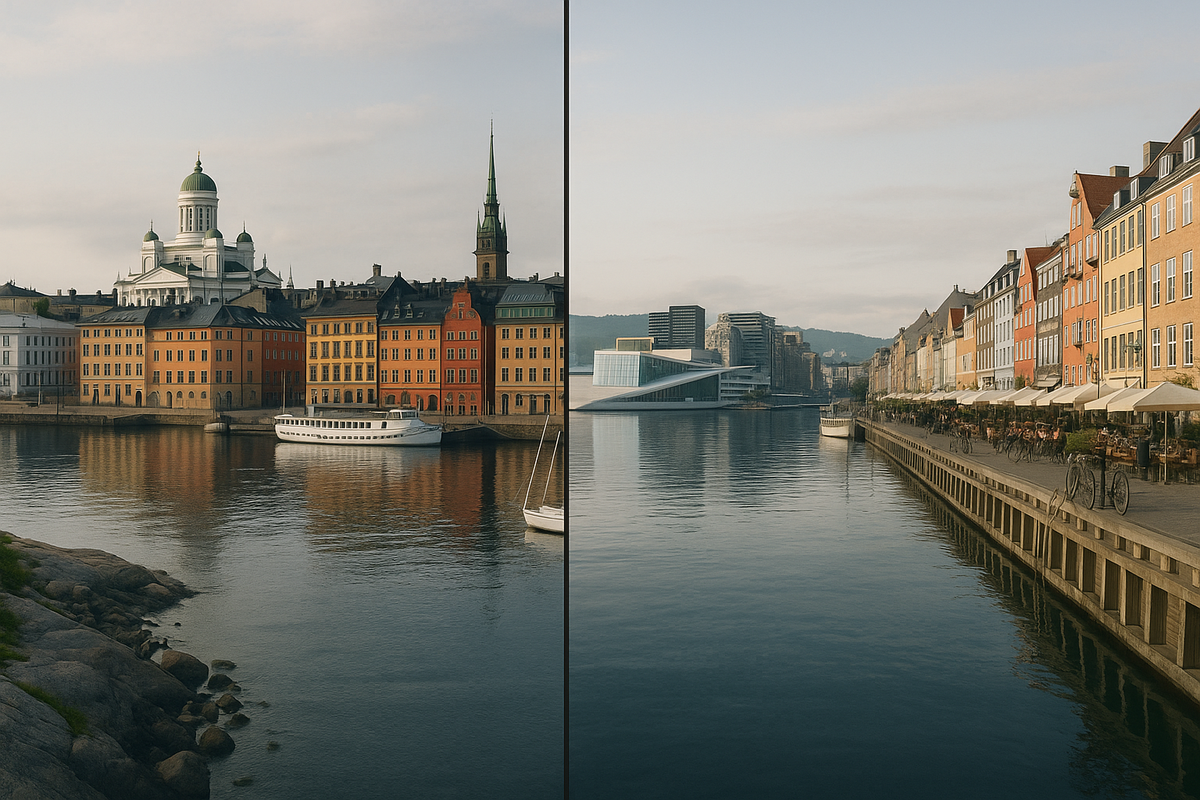
Scandinavian capitals regularly make it onto lists of the best cities in Europe for short trips: for their architecture, safety, food, proximity to nature and convenient transport. But that doesn't mean they're interchangeable. Some are more about the sea and design, others are about islands and museums, and others are about forests 30 minutes from the city centre.
The goal here is not to declare a ‘winner,’ but to help you come up with an honest answer: which city would be best for your first northern experience.
Four capitals in one picture
First, a quick ‘portrait from life.’ Imagine that you have four stories in front of you, one for each city.
Helsinki: sea, air and calm minimalism
Helsinki is a city that is easy to underestimate from pictures and easy to fall in love with in person. The sea, islands, parks and forests are literally woven into the fabric of the city: from the centre, in 10-15 minutes you can find yourself either by the sea with saunas or in a forest with trails.
Important details:
- a compact centre that is pleasant to walk around;
- architecture ranging from the classic Senate Square to modernism and minimalist new districts;
- sauna culture right in the city — from stylish public saunas by the sea to local ‘house’ options;
- the feeling that you are not in a ‘tourist park’ but in a real city where people live, work and study side by side.
Helsinki is especially appreciated by those who love the combination of urbanism and nature: a museum and coffee in the morning, rocks by the sea and a warm sauna in the evening.
Stockholm: a postcard on 14 islands
Stockholm is often called Scandinavia's largest postcard, and not without reason. The city stands on 14 islands between the Baltic Sea and Lake Mälaren, so water and views are literally everywhere.
Whether in winter or summer, Stockholm offers:
- The old town of Gamla Stan — narrow streets, gingerbread facades, small cafes and Christmas markets in winter;
- an impressive array of museums: from the Vasa ship and the ABBA museum to contemporary art spaces;
- the culture of fika — “stop and have a coffee and a bun” as a legal ritual of slowing down;
- ice rinks, skiing and even “wild skating” on natural ice in winter are literally within reach.
If pictures, videos and the feeling of ‘I'm in a European capital with the wow factor’ are important to you, Stockholm easily makes it into the top two.
Oslo: urban comfort and forest in 30 minutes
Oslo is a case of a city that lived in the shadow of its neighbours for a long time and then suddenly shot to fame. Modern architecture on the waterfront, the new opera house, the MUNCH museum, the National Museum, art clusters and sculpture parks — all within a short tram or walking distance.
Oslo's key trick is different:
in 30-40 minutes by metro, you can get from the centre to a full-fledged forest or ski slopes, toboggan runs and winter trails.
For example:
- during the day, you can ski, walk in the forest or go sledding;
- in the evening, you can return to the city, to a warm sauna by the fjord, a restaurant or a concert.
Oslo is great for those who love active recreation and nature but don't want to give up urban infrastructure.
Copenhagen: hygge, cycle paths and gastronomy
Copenhagen is the southernmost and, in some ways, the most ‘mild’ of the four in terms of climate. Winters here are damp but moderately warm; summers are mild and bright. The city has long cultivated its image as the ‘capital of hygge’: candles in windows, cosy cafés, design shops and endless cyclists.
Features:
- a vibrant gastronomic scene — from wine bars and street food to restaurants on a par with Noma's successors;
- an emphasis on design and architecture: embankments, creative spaces, modern neighbourhoods;
- an atmosphere of ‘everyone is a little relaxed, but everything works.’
Copenhagen is often chosen by those who want a feast of flavours and a beautiful urban environment, but are not looking for extreme cold and snowy adventures.
- Helsinki — urban minimalism, the sea, saunas and nature on your doorstep.
- Stockholm — stunning views, islands, museums and fika.
- Oslo — forests and skiing 30 minutes from the city centre + new museums.
- Copenhagen — food, design, bicycles and hygge.
Practicalities: weather, prices, logistics
Once the excitement has died down a little, it's time to get practical: when to go, how much it will cost, and how to get there.
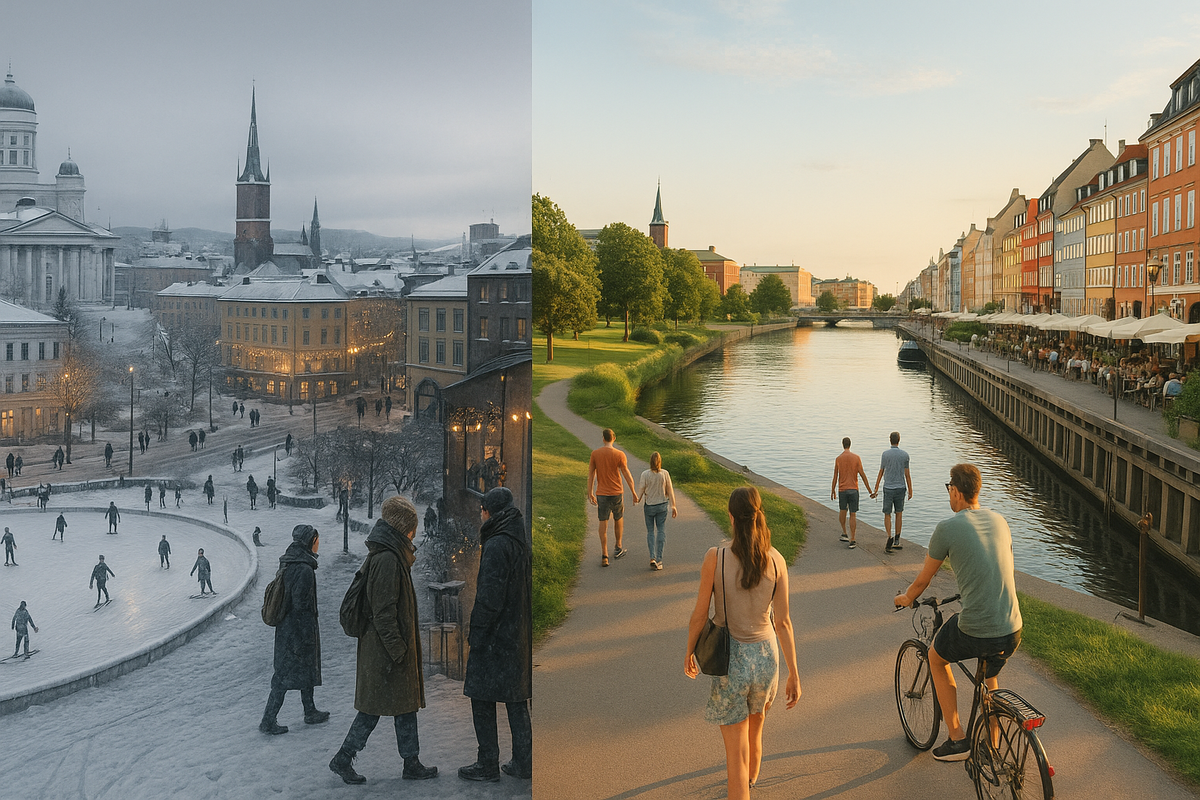
Weather and seasons: not just about winter
Scandinavian capitals are year-round destinations, but there are important nuances to consider for a winter city break in Scandinavia:
- Helsinki in winter means real snow, ice, short days and sub-zero temperatures, especially in January and February. But the sea and the wind add to the experience. On the other hand, winter activities are great in the city: saunas, ice rinks, Christmas markets, winter parks.
- Stockholm has similar weather, but often with slightly less wind. In winter, there are ice rinks, skiing almost within the city limits, walks along the embankments and across the islands.
- Oslo in winter offers a stark contrast: below is the city, above is a full-fledged snow resort, which is 30 minutes away by metro. It's the perfect format: skiing or sledding during the day, bars or museums in the evening.
- Copenhagen is milder in winter, but wetter: less snow, more ‘sideways rain’, but a stronger feeling of hygge — you'll spend a lot of time in cafes, bars and museums.
In summer, the picture evens out: all cities are green, lively, with water and terraces. If you are afraid of the cold but want to visit the north, June-August is a good starting point.
Prices: where it hurts your wallet
Prices depend heavily on exchange rates and the specific year, but the general hierarchy is usually as follows:
- Copenhagen and Oslo are the most expensive in terms of accommodation, restaurant food and alcohol.
- Stockholm is ‘slightly cheaper’, especially if you choose not to stay in the very centre.
- Helsinki is often a step cheaper than Copenhagen and Oslo, but more expensive than many cities in Central Europe.
Roughly speaking, if you are on a budget:
- accommodation and restaurants in Copenhagen/Oslo can be 10-20% more expensive than in Helsinki/Stockholm for a similar standard;
- the easiest ways to save money are:
- – choosing apartments instead of hotels;
- – eating at inexpensive bistros and buffets;
- – city cards (Oslo Pass, Copenhagen Card, Stockholm Pass, Helsinki Card) — they often include transport + museums and are worth it for 3–4 days.
Logistics: flights and travel
In terms of ‘easier to fly to’ in 2026, usually:
- Copenhagen and Stockholm offer many direct flights from Europe and connections from other regions;
- Helsinki is a major hub, especially for Europe-Asia routes and northern domestic flights;
- Oslo has also been actively expanding its role as a comfortable city break destination in recent years.
The capitals are well connected:
- by air — short flights of 1–1.5 hours;
- by sea — ferries from Helsinki to Stockholm and Helsinki to Tallinn, from where it is easy to travel further;
- by land — trains and buses, if you are planning a longer route.
If you are planning where to fly to Scandinavia for the first time and are thinking about a multi-route trip, keep in mind that it is one thing to ‘fly to one city for the weekend’ and quite another to put together a chain of 2-3 capitals in 7-10 days.
If you want snow and lights, look at the period from late November to March. If you are afraid of darkness and cold, but want a northern vibe, choose May–September. The city will remain the same, only the scenery will change.
Which city is right for you?
Now for the most important thing: not ‘which city is best in general’, but which is best for you right now.
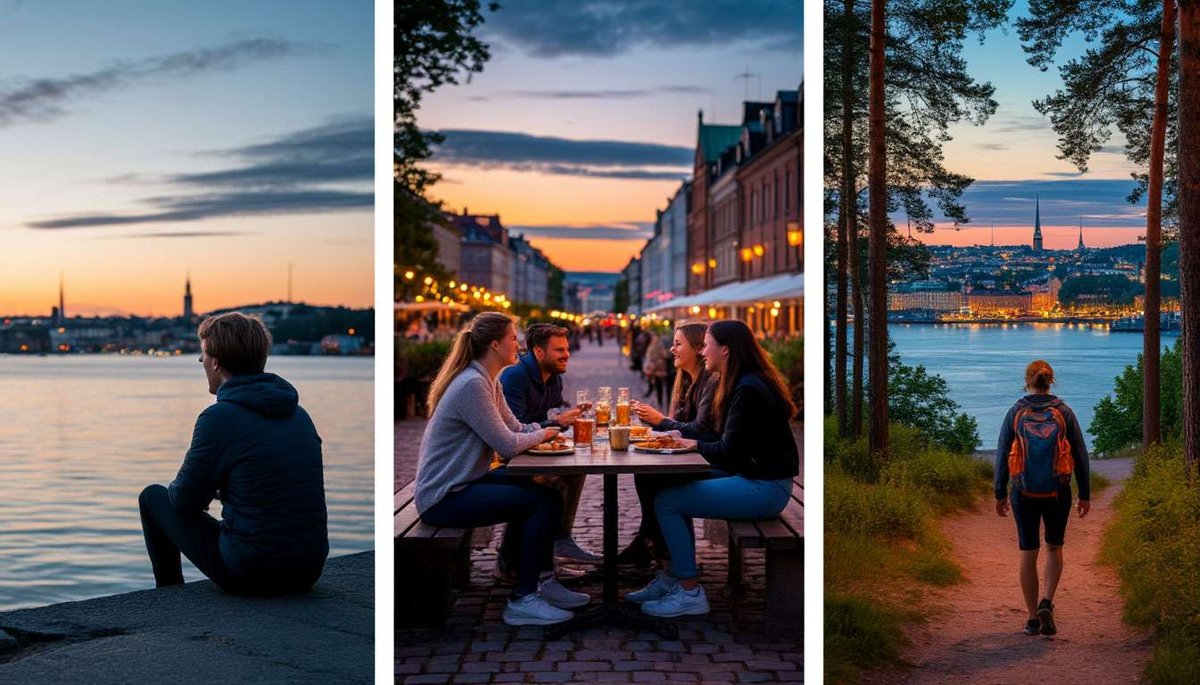
If you are an introvert and love water and silence
Your candidates: Helsinki and, in second place, Stockholm (but not in high season).
- In Helsinki, it's easy to find quiet areas by the sea, parks and forest trails literally within the city limits. The city is not too noisy, does not like to shout, and gives you space to set your own pace.
- In Stockholm, it's easier to get to the islands further away from the centre, walk along the embankments and small squares, and get away from the most touristy spots.
If you want to ‘just walk around, sit in a café and look at the water,’ these two cities will gently ease you into life.
If you are an extrovert and love food and bars
Your main candidates are Copenhagen and Stockholm.
- Copenhagen is a paradise for those who love the gastronomic scene: from high-end cuisine to casual wine bars and street food. Plus lively neighbourhoods, bars, concerts and events.
- In recent years, Stockholm has greatly improved its restaurant scene, from new establishments in the Södermalm district to affordable places with creative cuisine.
If for you, travelling means ‘eating, drinking, talking, wandering around bars and not thinking too much about time,’ these two cities will meet your needs.
If you want ‘city + active outdoor recreation’
The favourite here is Oslo, followed by Helsinki and Stockholm.
- In Oslo, the forest and ski areas are within easy reach of a single metro ticket: skiing, sledging, winter trails, and then the lively centre by the fjord.
- In Helsinki, it is convenient to combine a day in the city with sea saunas, islands, and walks in the surrounding forest areas.
- In Stockholm, you can easily get to the nearest islands and ski/walk around the lakes.
If you cannot imagine a holiday without activity, Oslo is a very logical starting point.
If you are on a tight budget
Here's the honest truth:
- Helsinki and Stockholm are usually easier to fit into a moderate budget if you choose accommodation that is not in the most touristy areas and eat more in bistros/cafes rather than fine dining establishments.
- Oslo and Copenhagen tend to be more expensive, especially when it comes to accommodation and alcohol.
Here's how you can save money:
- stay in aparthotels or apartments with kitchens;
- use city cards that include transport and museums;
- focus on eating hearty meals during the day (business lunches, buffets) and snacking in the evening.
“We started with Copenhagen, and it wasn’t the easiest beginning for our budget. For the second trip we chose Helsinki and realised that a city where you can walk to the sea and a sauna in 15 minutes – and don’t have to think where to get more kroner for a cocktail – suits us much better.”
Ready-made scenarios for your first trip
To avoid getting bogged down in theory, let's put together a few typical scenarios that are a good place to start.

Scenario 1. ‘Calm North’: Helsinki only (3–4 days)
Suitable if:
- you love the sea and greenery;
- you don't want to go straight to a big, noisy metropolis;
- saunas, walks and ‘getting a feel for how people live here’ are important to you.
What 4 days might look like:
- Day 1. The city centre, embankments, basic landmarks, evening in a public sauna by the sea.
- Day 2. Museums/design + parks/islands.
- Day 3. A trip to a neighbouring town or a national park not far from the capital.
- Day 4. Leisurely walks, coffee, shopping, a small market.
This is a good answer to the question ‘where to fly to in Scandinavia for the first time’ if you are not sure how far north you want to go.
Scenario 2. ‘Postcards and museums’: Stockholm (4 days)
Suitable for those who:
- want a beautiful old town centre, water and islands;
- love museums and walks;
- are not afraid that there will be more tourists than in Helsinki.
Example:
- Day 1. Gamla Stan, embankments, sunset.
- Day 2. Museums (Vasa, ABBA, contemporary galleries), fika in different areas.
- Day 3. Islands and nature areas, in winter — ice rinks and possibly skiing or Nordic skating.
- Day 4. A quiet day depending on your mood: shopping, markets, more museums.
A good choice if you are interested in both history and modern city life.
Scenario 3. ‘City + forest’: Oslo (4–5 days)
For those who cannot imagine a trip without activities:
- Day 1. City centre, waterfront, new neighbourhoods, one or two museums.
- Days 2–3. Forest, skiing, sledging or winter hiking in the surrounding area.
- Day 4. More culture: MUNCH, National Museum, sculpture parks.
- Day 5 (if possible). Duo: morning forest + evening city.
This is an option where you really feel that the capital and nature live side by side.
Scenario 4. ‘Hygge and gastronomy’: Copenhagen (3–4 days)
For those who:
- love food, bars, design;
- want mild Scandinavian weather;
- are ready for a higher bill.
What to do:
- walk along the embankments and canals;
- sit in cafes and wine bars, try local sweets and coffee;
- visit design museums, galleries and castles;
- ride bicycles, if the season allows.
Copenhagen rarely becomes the ‘first northern capital’ for those who count every penny, but for those who appreciate atmosphere, it often turns out to be a favourite.
Scenario 5. ‘Two capitals at once’ (7 days)
If you want to compare the cities at once, but don't want to turn your holiday into a logistical nightmare, you can do the following:
Option A: Helsinki + Stockholm
Option B: Copenhagen + Oslo
In both cases:
- arrival in the first capital, 3–4 nights;
- transfer/flight to the second, another 3 nights;
- the logistics remain reasonable — roughly the same as a regular flight between European cities.
This way, you get a comparison and an understanding of where you want to return to for a longer stay.
Beginner's mistakes and how to avoid them
Finally, here are a few typical pitfalls that almost everyone who is planning their first trip to Scandinavia falls into.
It looks good on the map, but in practice it means suitcases, airports, train stations and minimal time in each city. It's better to choose one city for 3-4 days or two capitals for 7 days than to rush through all four.
Choosing only based on ticket price, without considering the cost of living in the destination.
A cheap flight to an expensive city can sometimes turn out to be a more expensive holiday than a slightly more expensive ticket to a more budget-friendly capital city. Look at the price of accommodation, transport and food as a whole.
Expecting summer scenery on a winter trip (or vice versa).
In winter, the north means short days, snow/rain and wind. In summer, it means white nights, greenery and water. Scandinavia is beautiful in both versions, but it is important to decide in advance what kind of ‘decor’ you want this time.
Scandinavian capitals are best explored at a leisurely pace: walks, cafés, small museums, water and people. Leave yourself room for spontaneity; let at least one day be ‘unchecked’.
- Ask yourself an honest question: ‘Am I more interested in nature, the city, food or atmosphere?’
- Check the average prices for accommodation and food in your chosen capital city.
- See how easy it is to get to the surrounding natural areas (forests, islands, fjords).
- Estimate how many days you actually have — and don't try to squeeze all four cities into them.
Where to start in 2026
If you want to simplify your choice:
- if you want a gentle start, nature nearby and saunas — choose Helsinki;
- if you want postcards, islands, museums and the atmosphere of a European capital — Stockholm;
- if you are drawn to forests, skiing and fjords, but still want a city — Oslo;
- If you dream of design, food and hygge, choose Copenhagen.
None of these options would be a ‘mistake’ for your first trip. Scandinavia is set up in such a way that you can complete the picture from any starting point: with each subsequent trip, you can add another capital or region.
Helsinki Stockholm Oslo Copenhagen which to choose — this is essentially a question of ‘what are my current needs and resources’. If your budget and time are limited, start with one city and give yourself a chance to take your time. If you want to feel the difference right away, put together a package of two capitals for a week.
Save this article, share it with those who are planning a northern holiday, and write your questions: based on specific dates, the composition of the group and the budget, it is always possible to put together an itinerary that will work for you.
❓ FAQ
If you are unsure, Helsinki is often a universal choice: a gentle introduction, the sea, saunas, nature nearby and not the most extreme price tag. For those who want ‘postcards and museums’, Stockholm is a great choice. And if you are most attracted to gastronomy and hygge, it makes sense to start with Copenhagen.
This depends most on your city of departure and specific dates. In Europe, there are often many flights to Copenhagen and Stockholm, and slightly fewer to Helsinki and Oslo. Before making your choice, it makes sense to compare not only the cost of the ticket, but also the prices of accommodation and food on site to get an overall picture of the costs.
All four capitals work well for winter, but each offers a different experience. Helsinki and Stockholm are more about snow, lights and classic winter cities. Oslo offers a unique combination of ‘city + forest and slopes’ within the same transport zone. Copenhagen, on the other hand, focuses on cosiness, cafés, museums and hygge rather than snowy landscapes.
In the summer, all the capitals are much milder: long daylight hours, greenery, and active life on the embankments and terraces. In this case, it is easiest to choose based on your interests: Helsinki and Oslo for nature and water, Stockholm for islands and museums, Copenhagen for food and design. The cold in June–August is no longer extreme there.
Most often, Helsinki and Stockholm are slightly cheaper, especially if you book accommodation in advance and do not choose the most touristy area. Oslo and Copenhagen can add a significant amount to your budget due to more expensive hotels and restaurants. In any case, it is worth estimating the cost of accommodation, transport and food before buying a ticket.
Helsinki and Oslo are usually the most comfortable for children: there is a lot of greenery, water, understandable infrastructure, parks and museums with children's areas. Stockholm is also very family-friendly, especially in summer and during the Christmas markets. Copenhagen is perfect for families who are ready for an active city rhythm and slightly higher prices.
All four capitals are great for walking. Copenhagen is the clear favourite for cycling, with its well-developed cycling infrastructure. In Stockholm and Helsinki, the warm season is ideal for cycling. Bicycles are also used in Oslo, but the city is best explored by combining walking and public transport.
Yes, if you have at least a week and limit yourself to two cities. Popular combinations are Helsinki + Stockholm (with a ferry between them) and Copenhagen + Oslo. It is important not to try to ‘cover’ all four capitals at once and to stay in each city for at least 3 nights.
For one city, the comfortable minimum is 3 full days, preferably 4. During this time, you will not only be able to ‘run through the list’, but also feel the rhythm, find your favourite café, a couple of routes along the embankments and a park you want to return to. For two capitals, it is reasonable to plan 7-8 days, including travel time.
The most important thing is layers: thermal underwear, a jumper or fleece, a windproof top, a warm hat, gloves and shoes that are comfortable for walking on wet asphalt, snow and possibly ice. Plus a power bank (your phone will run out of battery quickly in the cold) and a scarf or buff that you can pull up over your face in the wind. Everything else depends on your personal preferences.
Very often, yes, but only if you don't turn your holiday into a marathon. One well-spent day in a capital city gives you much more insight than four cities seen from taxis and buses. If you didn't get bored, if you want to slow down and come back, then you've found the right place to start your acquaintance with the north.

0 comments
Log in to leave a comment