


🌨 We've seen enough TikTok videos about Lapland: what really awaits you in Finland, Norway and Sweden in winter
TikTok Lapland vs reality
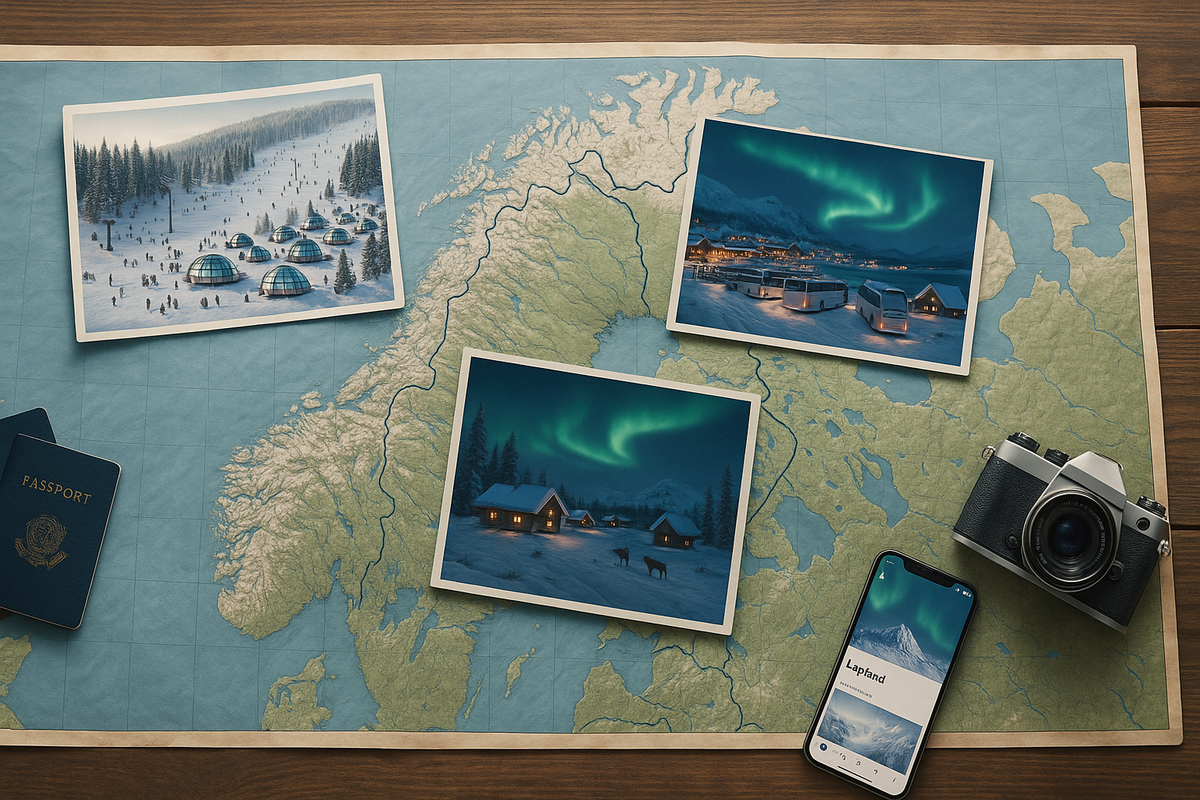
If you want to understand how winter in Lapland really is, we have to admit that we're all a little hooked on TikTok and Reels. There, Lapland is perfect snowdrifts, fiery northern lights every night, empty husky trails and glass igloos where you lie with a glass of sparkling wine and gaze at the green sky.
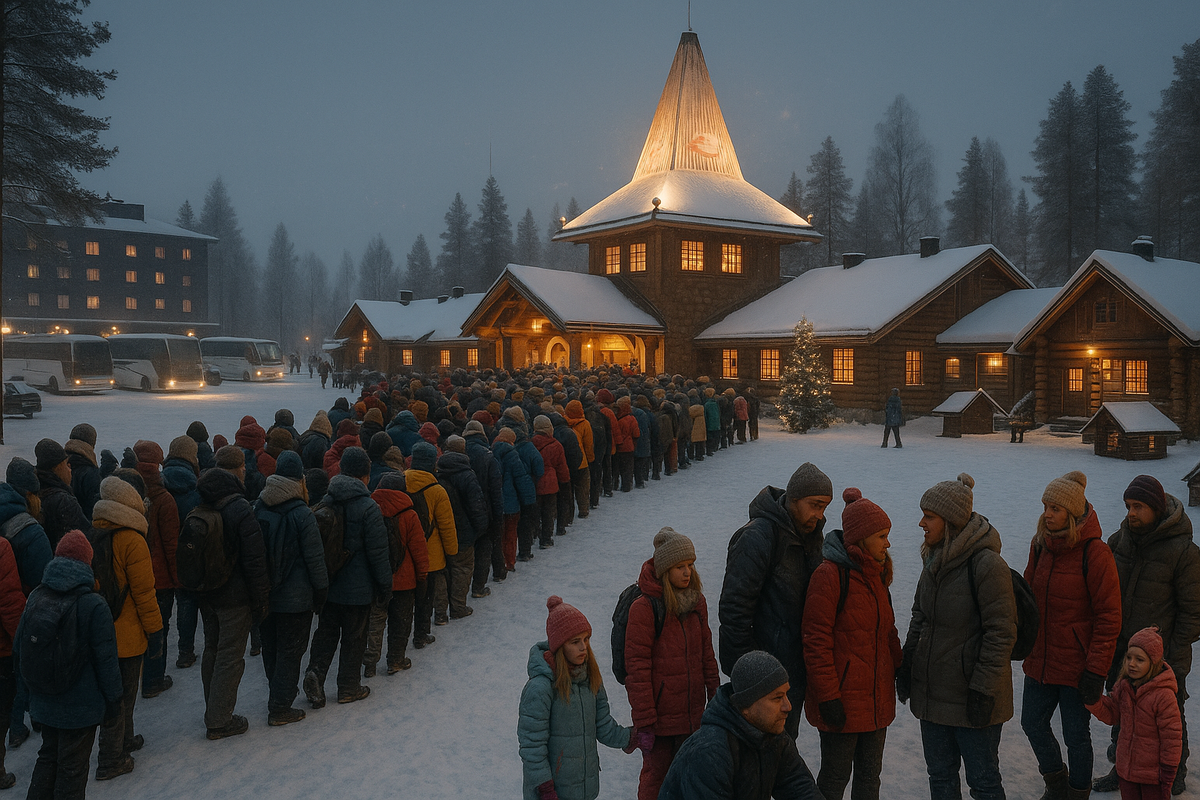
In reality, winter 2025–2026 in Finland, Norway and Sweden also means queues to see Santa, traffic jams on the roads to Rovaniemi, fully booked hotels in Tromsø, a Christmas tree against a backdrop of construction cranes and snow that sometimes turns into wet slush. Plus, there is growing talk of overtourism and pressure on Lapland's nature.
In this article, you will learn what will surprise you in Scandinavia in winter if you fly not to a commercial, but to the real north:
- why Rovaniemi is breaking records for the number of tourists and housing problems;
- how Finnish, Norwegian and Swedish Lapland differ in terms of weather, crowds and logistics;
- when the ‘New Year's fairy tale’ turns into queues, and when it turns into the very quiet, real north;
- and how to plan your route so that you can experience the north, rather than just chasing the picture.
And yes, we will carefully figure out where Lapland without filters begins and marketing ends — based on the 2025 investigation into development, overtourism and the impact on Sámi lands.
Lapland on the map: three countries, one myth
On TikTok, Lapland looks like one big white Santa Claus country. On the map, it is three different regions:
- Northern Finland (Lappi, including Rovaniemi, Levi, Jyllas, Saariselkä, Utsjoki);
- northern Norway (Troms and Finnmark, the Lofoten Islands, Alta and the surrounding area);
- Swedish Lapland (Kiruna, Abisko, Jokkmokk and other towns in the north).
Between them lie hundreds of kilometres, different languages, laws and styles of recreation. But in the minds of tourists, all this is often referred to by one word: ‘Lapland’. Hence the crowded hubs like Rovaniemi and Tromsø and the empty, little-known villages two hours' drive away.
The tourism boom and the price of a ‘winter fairy tale’
Over the past 30 years, the number of tourists in the northern regions has grown exponentially. In Finnish Lapland alone, the number of visitors has increased by approximately 160%, and some cities, such as Rovaniemi, have already exceeded 1.2 million overnight stays per year with a population of about 65,000.
The result:
- new hotels, cottages and trails are being built in popular resorts, cutting down green areas — from parks in Rovaniemi to slopes near Levi and Saariselkä;
- entire complexes of glass igloos are appearing in places that until recently were considered ‘national treasures’ and wilderness;
- local residents are complaining about rising housing prices and a shortage of long-term rentals — some apartments are being converted into daily rentals.
At the same time, northern Norway is breaking records for the number of overnight stays: in the northern regions alone, the number of foreign visitors grew at double-digit rates in the summer and autumn of 2025, and some cities, such as Tromsø and Lofoten, are openly discussing restrictions and tourist fees.
Swedish Lapland is still quieter, but is actively promoting ‘soft’ winter tourism: small ice hotels, family cottages, routes to Sami culture and viewing the northern lights in less crowded places.
Weather, light and snow: what you don't see in stories
The biggest ‘deception’ of TikTok is the feeling that in Lapland there is always:
- lots of snow,
- the northern lights,
- and winter as if on demand.
In reality, the forecasts for Finland, Norway and Sweden look blurred.
A day that ends at three o'clock
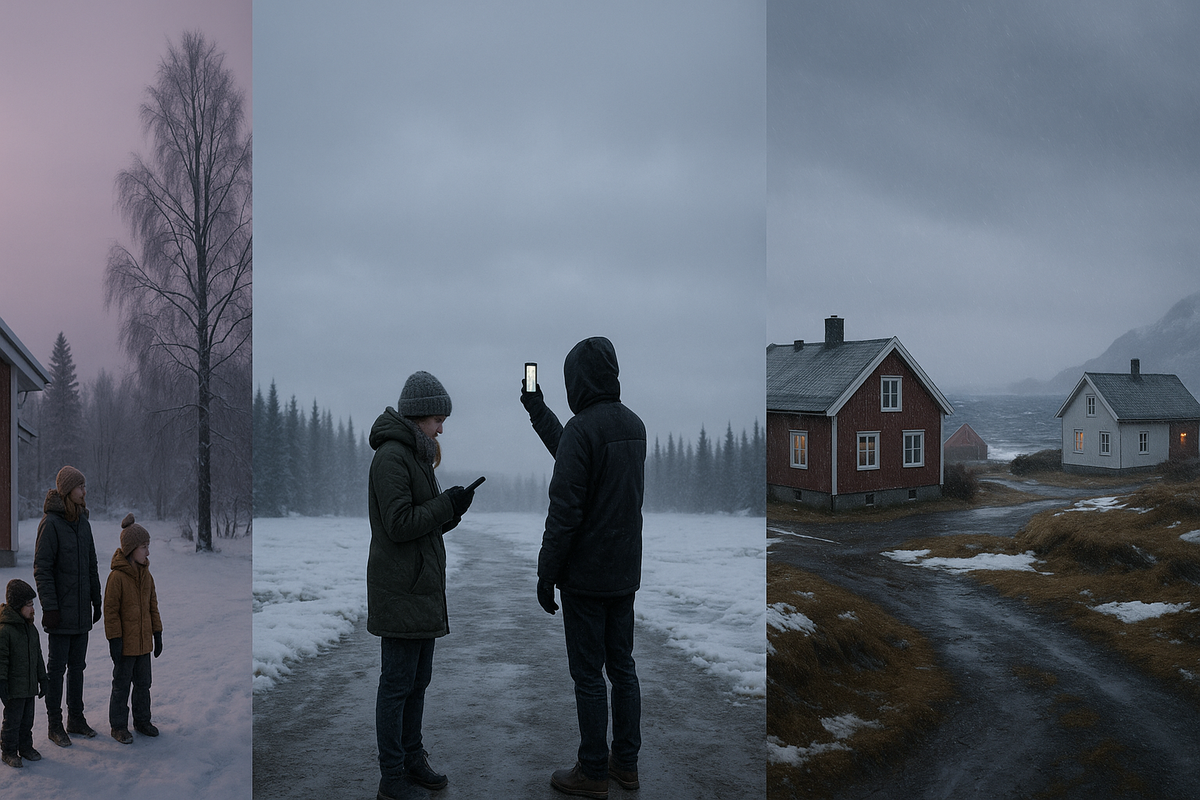
From November to January, the north experiences short days. The further north you go, the shorter they are: in Rovaniemi, there are several hours of twilight, while in Norway and Sweden north of the Arctic Circle, there is a polar night with a pink horizon instead of ‘day’ in the usual sense.
It's beautiful, but unusual. Especially if you've come for an ‘active holiday’ and your child feels like it's time to go to bed at three in the afternoon.
Northern lights: not every day and not everywhere
Marketing loves the phrase ‘guaranteed northern lights’. In meteorological terms, this means one thing: it is dark enough here and, theoretically, activity is frequent.
The facts:
- in Finnish Lapland, the aurora can be seen up to 200 nights a year — approximately every other night, if the sky is clear;
- the best months for a balance of light, snow and probability are late February and March, plus the transition period in autumn;
- in northern Norway and Sweden, activity is similar, but everything is covered by local cloud cover from the ocean or mountains.
In other words, the problem is not ‘low activity’ but reality: there may be a week of continuous ‘milky’ skies, and no Kp forecasts can help.
Snow that is not guaranteed to stay from November
A common mistake is to plan a trip for the end of November ‘for the first snow and fairs’. Reality:
- in discussions among travellers, northern Finland at the end of November is described as ‘very different: from open grass to normal snow’;
- in Rovaniemi and the surrounding area, full-fledged stable snow often comes closer to December–January, and further down the map of Finland and Sweden, winter is increasingly late;
- In Norway, there is another twist: along the fjords, it is milder and wetter, so the ‘winter wonderland’ in the picture easily turns into a mixture of rain, wind and snow.
- Plan for at least 4–5 nights, rather than ‘just popping out for the weekend’.
- Allow for one ‘bad day’ in case of rain, storms or fatigue.
- Divide your day into blocks: street → warm room → street again.
Rovaniemi, Santa and overtourism: why everyone is tired
What TikTok sells as ‘Santa's village in the wilderness’ is actually a fairly large tourist cluster with an airport, hotels, shopping centres and kilometres of cottage development around it.
In recent years:
- the number of guests has grown to approximately 1.2 million overnight stays per year and continues to grow;
- Santa Park itself welcomes hundreds of thousands of people per season;
- local residents have protested against overtourism and the lack of housing, as some apartments are being used for short-term rentals.
At the same time, travellers themselves describe their impressions quite honestly:
- ‘It's a tourist trap, but for the sake of ticking a box and fulfilling a child's dream, it's fine.’
- ‘Everything is short and expensive, but Santa inside is done really well, and the kids love the magic.’
- ‘The queue to see Santa is long, with adults standing in the same place as the children, which is an attraction in itself.’
At the same time, basic things like meeting Santa Claus can actually be free, and money is charged for photos and additional ‘emotional packages.’
Focusing only on Rovaniemi and believing that “it has everything you need from Lapland”. This way you get the maximum number of attractions, but not the peace, depth and real wilderness.
Locals and experienced travellers often advise going a little further on the map: towards Ivalo, Saariselkä, Jullas, small villages to the north — there are fewer crowds there, but there are huskies, reindeer, saunas, forests and a real winter.
At the same time, public investigations in 2025 show another side of the hype:
- hundreds of thousands of square metres of former forests have been cut down and built up around resorts in recent years;
- glass dome complexes are being built on riverbanks in areas that were previously considered particularly valuable;
- Sami communities complain about pressure on traditional reindeer herding and pastures.
This does not mean that you cannot go there — it means that you should go there more consciously.
"We arrived in Rovaniemi with the same expectations as in the videos: Santa, the Northern Lights, huskies. In the end, we spent most of the day in a small village further down the road: knee-deep snow, a sauna, silence and a single road leading into the forest. We realised that ***TikTok versus life in Finland*** are two different universes."
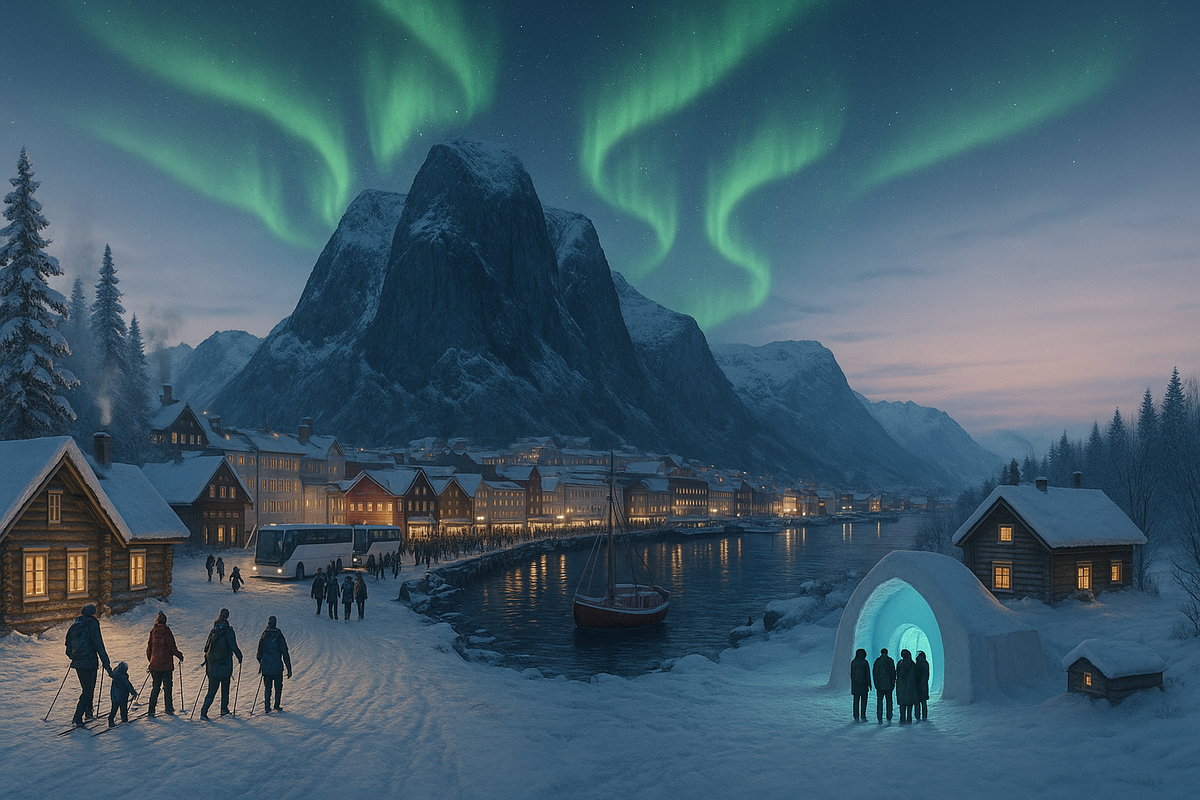
Finland, Norway, Sweden in winter: what to look for in each country
To avoid disappointment, it is useful to answer honestly: what is most important to you — stunning scenery, peace and quiet, active sports or culture?
Finland: forests, saunas and the mild north
Finnish Lapland is the most ‘balanced’ option:
- the climate is more stable than by the ocean;
- the infrastructure is geared towards families and introverts;
- it is easy to combine activities (husky sledding, snowmobiling, skiing) with saunas and quiet evenings.
If you want to experience northern life rather than an amusement park, choose smaller resorts and villages rather than just large hubs.
Norway: dramatic views and crowds in winter
Northern Norway is all about fjords, mountains, the sea and the dramatic northern lights, weather permitting. But:
- winter tourism is growing faster than the infrastructure can adapt;
- in Tromsø, there is already talk of airport congestion and discussions about regulating visitor numbers;
- hotels and tours become more expensive during peak months and fill up long before the season begins.
Here, it is easier to feel the scale and ‘wow’ factor of the aurora, but there is a higher risk of spending your holiday chasing the weather and crowds on the waterfront.
Sweden: a small ‘pocket of magic’
Swedish Lapland is often underrated.
- The region is more compact, with fewer ‘must-see’ spots.
- the emphasis is on nature, culture and tranquillity;
- around popular places like Abisko, soft forms of recreation are actively promoted: small groups, cottages, ice hotels.
This is a good option if you want to see the northern lights but don't want to end up in a ‘tourist capital’ with crowds of buses.
How to plan an honest itinerary and not burn out
The biggest mistake is trying to ‘see everything’ in one week: Rovaniemi, Tromsø, Lofoten, Abisko, and even the capital on top of that. In reality, you'll end up with a lot of suitcases and little air.
Basic working approach:
- Choose one base country that suits your personality.
- Add a maximum of one ‘trip’ to a neighbouring country — by train or a short flight.
- Reduce your must-do list to 1-2 activities per day.
Example of a relaxed 7–8-day itinerary
- 2–3 nights in northern Finland or Sweden — forests, saunas, huskies, quiet walks;
- 2–3 nights in a more ‘picturesque’ place (Tromsø, Lofoten, Rovaniemi) — to get that ‘I was there, I saw it on TikTok’ feeling, but without any illusions;
- 1–2 nights in the capital (Helsinki, Stockholm, Oslo) on the way there or back — to change the scenery and experience city life.
This way, you get the north, the cities, and breaks — without rushing.
The north without filters: how not to be disappointed
The north is honest. It doesn't promise 10/10 sunshine, smooth snow and empty slopes. It offers something else: silence, the feeling of being at the edge of the map, forests that darken even during the day, and very simple pleasures — hot soup after the wind, a sauna after minus twenty degrees, conversations in the dim light of the kitchen.
If you look at the trip as an attempt to ‘recreate a TikTok video,’ disappointment is almost guaranteed. But if you immediately tune in to exploration, respect for nature and people, and a willingness to see not only the beautiful showcase but also the consequences of mass tourism, the north will reciprocate.
Lapland without filters is not about perfect shots, but about experience: wet snow on your boots, a conversation with a local guide about how his city has changed, real darkness and those rare nights when the sky suddenly lights up green and the whole crowd falls silent at once.
If you like, write to us about your current image of Lapland and what you fear most about such a trip: the cold, the crowds, the prices, or ‘what if we don't see the aurora’. We can analyse your itinerary and together find a balance between your dream and reality.
❓ FAQ
Theoretically, yes, especially in February and March, when there are many nights and activity is high. But due to cloud cover, it's a lottery, so it's better to plan for 4-5 nights and be prepared for the fact that the most valuable thing is not only the show in the sky, but also the north itself.
You can, but not for long: 1-2 nights to tick it off your list and see Santa, and then head deeper into Finland to quieter areas. If crowds are not your thing, consider smaller resorts or Swedish/Norwegian Lapland.
You can do everything yourself: flights, trains, cottages and activities are easy to book online. A tour makes sense if you don't want to deal with logistics and are travelling with a large family, but it doesn't guarantee good weather or the Northern Lights.
The harshest frosts are often felt inland in Finland and Sweden, especially when it is windy. In Norway, the temperature may be lower on the coast, but the humidity and wind make the cold more ‘biting’.
A car gives you the freedom to hunt for clear skies and visit less touristy places, but it requires experience in winter driving. If you are not prepared for ice and snow, it is easier to rely on transfers, trains and local tours.
The further away from major hubs and airports, the quieter it is: small villages in Finland, small resorts in Swedish Lapland, less popular areas of Norway. It is important to be prepared for fewer choices of cafes and activities.
On average, Norway feels noticeably more expensive in terms of hotels, restaurant food and excursions. Finland and Sweden are slightly easier on the budget, but nowhere here will be ‘cheap’ in the usual sense of the word.
Cameras enhance colours and light through long exposure and processing, so the actual brightness may be softer and paler. This is normal: it's better to accept in advance that you are going for the experience, not for an accurate reproduction of the image.
The classics work: thermal underwear, a wool or fleece layer, a windproof jacket and trousers, warm shoes, mittens over thin gloves, a balaclava or hat with ear flaps. Plus a thermos and hand warmers in case of long waits at bus stops.
Yes, but it's better not to try to cover everything: combine one base country with a maximum of one or two additional destinations. For example, spend a few days in Finnish Lapland and take a day or night trip to Norway to see the fjords.
Choose less crowded places, stay longer in one region, support local businesses, respect the Sami territories, and don't treat the north as a huge amusement park. Then the reality of winter Lapland will not be a ruined backdrop, but a living home for people and nature.
0 comments
Log in to leave a comment