



🎭 How much does a ‘winter wonderland’ in Scandinavia really cost? Finland, Norway, Sweden, Denmark — an honest breakdown of the budget
❄️ ‘Winter wonderland’ without filters: what you really pay for in Scandinavia
If you want to understand how much winter in Finland and neighbouring countries really costs, let's be honest: it's expensive, but predictable. And the more information you have, the less likely your holiday bill will look like a scene from a horror movie.
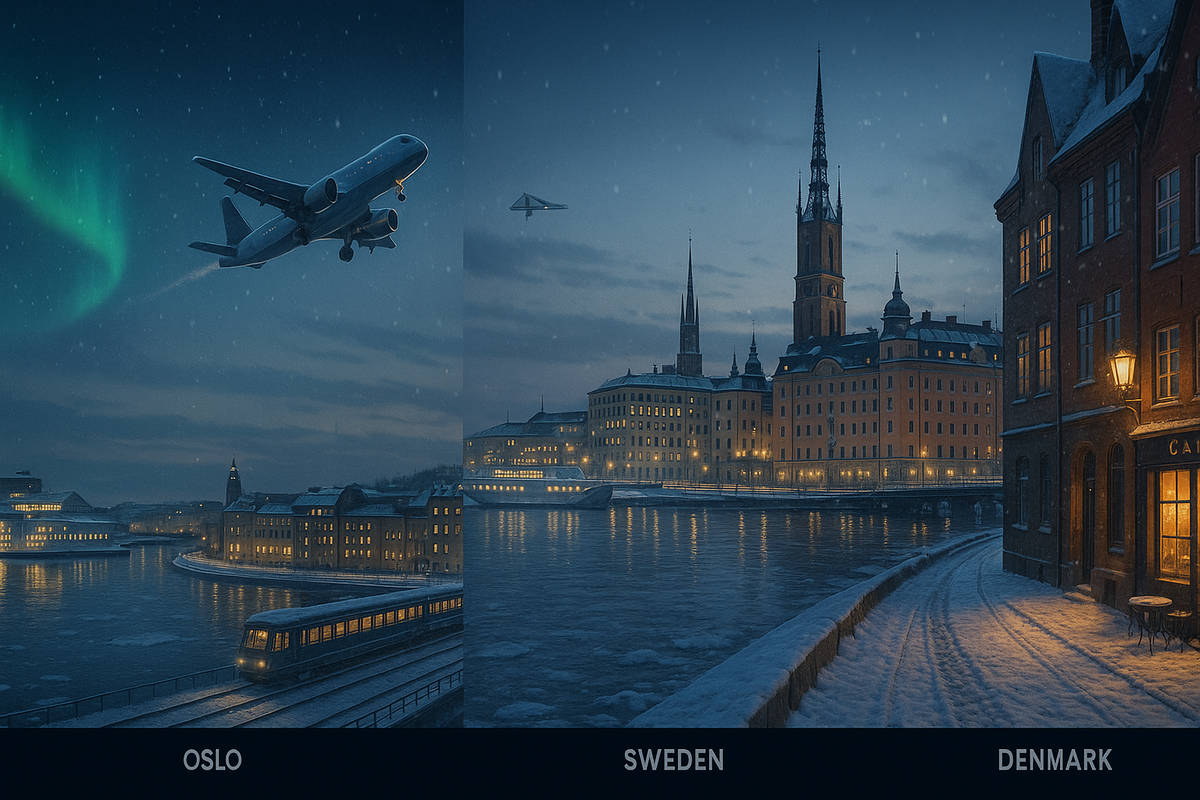
Finland is the main character in this story: people fly here for Helsinki, Lapland, the northern lights, Santa Claus, saunas and that feeling of ‘silence and snow as far as the eye can see’. But very often the route turns into a winter tour of Scandinavia: Oslo with its fjords, Stockholm with its museums and Copenhagen with its ‘hygge’ cafes are added to Finland.
In this article, you will learn:
- how much a day in Finland, Norway, Sweden and Denmark costs in winter — without any glossy illusions;
- how much flights, trains, ferries and domestic travel cost;
- how much ‘Lapland with Santa’ and ‘fjords under the snow’ really cost;
- which scenarios are suitable for tourists and which are suitable for those who already live in the region;
- what typical mistakes break the budget and how to avoid them.
Our task is not to scare you with prices, but to show you the range: from the minimum ‘surviving comfortably’ to the option ‘a fairy tale, but without a loan for life’.
We base our figures on the latest guides to Finland and Scandinavia (budgets for 2024–2025), where the daily budget in Finland for the average traveller is often estimated at around €130–200 per person per day, including accommodation, food, transport and some activities.
Norway is usually half a step higher in terms of expenses, while Sweden and Denmark are roughly in the same league, but with nuances depending on the city.
💶 Basic check: how much does a day cost in each country
Let's start with the dry economics. These are average figures for winter, per person per day, without intercontinental flights and without luxury excesses:
The figures are made up of several blocks:
- Accommodation.
- Helsinki: from €35–45 for a bed in a hostel to €90–150 for a normal 3–4* hotel.
- Rovaniemi and Lapland: prices jump higher in winter, with rooms on popular dates easily going for €180–250 per night.
- Oslo, Stockholm, Copenhagen: prices remain steady at €120–200 per night in the city centre in winter, sometimes higher on peak dates.
- Food.
If you don't live exclusively in the supermarket, count on €30-50 per day: lunch buffet, coffee with a bun, simple dinner. In Norway and Denmark, the upper limit is slightly higher.
- Transport around the city.
Day passes and city cards such as the Helsinki Card cost from ~$60 per day, including museums and transport.
- Museums and activities.
Museum tickets — €10–20, winter activities and tours (safaris, fjords, northern lights) — a separate article, more on that below.
In short: for a winter holiday in Finland and neighbouring countries, a comfortable daily budget for an adult is €130-200; with strict economy and good planning, you can get by on €90-120, but without ‘a needle and a husky for every day’.
🚆 Flights, trains and ferries: the hidden budget guzzler
The second largest part of the bill is travel. Here, Scandinavia behaves like a very disciplined but expensive cat: everything is on schedule, but food costs money.
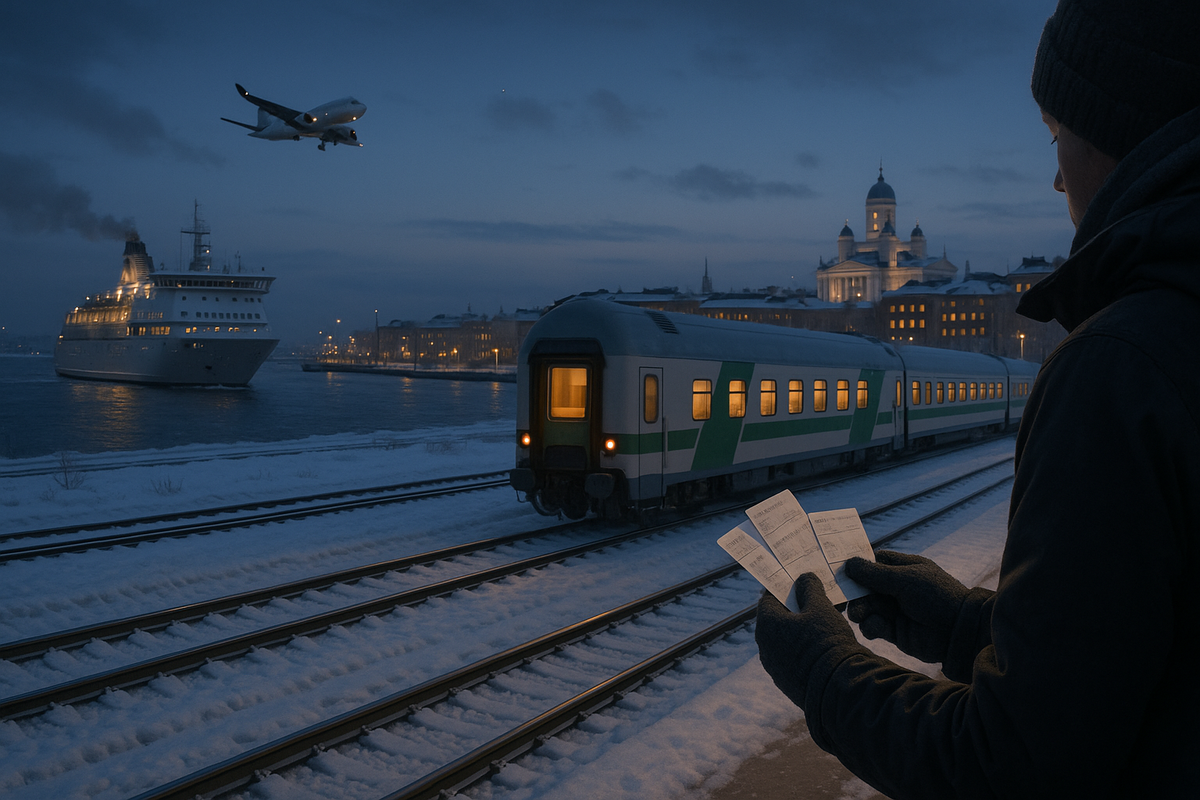
Flights to Finland and within the region
- International flights to Helsinki depend heavily on the point of departure, so we will leave them out of the equation — they are not unique to Scandinavia.
- Domestic flights and regions.
- Helsinki → Rovaniemi/Ivalo/Kittilä: in winter, tickets often cost €80–180 one way, unless you catch a super deal.
- Helsinki → Oslo/Stockholm/Copenhagen: low-cost airlines and SAS/Finnair offer tickets from €40–60, but before the holidays, the range quickly goes up to €120–200.
Trains and night journeys
Finland is a paradise for those who love trains. I went to bed at night and woke up in the snow in the morning.
If you are planning ***5-day routes through Lapland***, check out VR night trains with reserved seats or compartments: this will save you one night's hotel accommodation and reduce the number of flights.
- Helsinki → Rovaniemi: a night train with a seat in a standard carriage can cost €40–70, a compartment €80–140 one way, depending on the date and how early you book.
- Helsinki → Oulu/Kemi/Kuusamo: similar price range, sometimes slightly cheaper.
In Norway, Sweden and Denmark, trains and buses cost about the same as domestic flights in Europe:
for example, a trip through Norway to the fjords or the winter route from Stockholm to northern Sweden to hunt for the Northern Lights can easily cost €50-120 one way.
Ferries: floating hotels
Classic routes include ferries between Helsinki and Stockholm/Tallinn:
- Helsinki → Stockholm (Viking Line / Tallink):
- round-trip overnight tickets with a cabin can start at €50–70 during off-peak dates and go up to €100–150 during peak dates.
- Helsinki → Tallinn:
- Day ferries usually cost €20–50 one way if booked in advance.
If you live in Finland, the ferry is often the cheapest way to take a ‘micro-European getaway’ and compare prices at restaurants in Stockholm and Copenhagen with those in Finland.
🏔 Scenarios: Lapland, fjords and capitals on a realistic budget
Now let's put this together into real-life scenarios. Prices are approximate, per adult, excluding international flights.
1. 5–7 days: Helsinki + Lapland (Finland as a base)
Who it's for:
first trip to the region, want to see ‘both the city and the northern lights’.
Approximate structure:
- 2–3 days in Helsinki;
- 3–4 days in Lapland (Rovaniemi / Levi / Ivalo).
Daily budget:
- Helsinki — €130–180 per day (hotel €100–130, transport + food + a couple of museums).
- Lapland — €180–300 per day: accommodation is more expensive, activities are costly.
Major additional expenses:
- Flight or night train to Lapland: €80–150 one way.
- Husky safari / combined winter tour: €140–200 for 2.5–3.5 hours.
- Northern Lights tour: €120–200 per night, closer to Norway/Tromsø — often €140–220.
In total, for 6–7 days, the cost can easily reach €1,300–2,000 per person, especially if you include 2–3 paid activities.

2. 4–5 days: Helsinki + Stockholm/Tallinn + Copenhagen
Who it's for:
Those who love cities, museums, Christmas lights and where to go in Helsinki in winter more than snowmobiling.
Option:
- Day 1–2: Helsinki;
- Night ferry to Stockholm;
- Day 3–4: Stockholm (or Copenhagen, if flying);
- If desired, a short flight to Copenhagen.
Budget:
- Individual cities — €130–200 per day.
- Ferries and flights between capitals — plus €80–200 to the total bill.
Plus: you can play around with hotels and choose something simpler to save money for cafes, museums and the atmosphere. This is a good scenario for residents of Finland who want to ‘change the scenery’ in one trip: how to travel to Norway on a budget in winter or to Sweden/Denmark.
3. 7–9 days: Finland + Norwegian fjords or Tromsø
Who it's for:
those who have already been to Finland or live here and want ‘difficulty level 2.0’ — fjords, mountains, sea.
Core itinerary:
- Helsinki → Tromsø by plane or via Oslo;
- a few days in Norway (hunting for the aurora, fjords, winter activities);
- return via Finland or directly back.
Norway in terms of spending:
- Accommodation: €120–200 per night in popular cities in winter.
- Northern lights tour from Tromsø: from €120 per night, more often €160–250.
- Food and transport are slightly more expensive than in Finland.
This route can easily cost €1,700–2,500 per person per week, even without luxury accommodation. But in return, you get ‘one trip, two northern worlds’ and the opportunity to compare winter holidays in Finland and Norway first-hand.
⚠️ Top mistakes that make the ‘fairy tale’ very expensive
This is where budgets most often break down.
Booking Lapland for Christmas week 1–2 months before the trip and being surprised that a simple room costs as much as a mini-suite in Rome.
- Late booking of Lapland and capital cities.
The closer it gets to Christmas and New Year, the more the price per night turns into a mini-mortgage, especially in Rovaniemi and central Helsinki.
2. Ignoring alternatives.
Sometimes it is cheaper to stay overnight in a neighbouring town and travel by train/bus than to live ‘in the thick of things’. The same applies to choosing between Rovaniemi and, for example, Kemi/Oulu, if saving money is important.
3. Buying too many tours.
‘Husky, reindeer, snowmobiles, two aurora tours’ — the total bill for activities can easily become a separate mini-budget of €700-1000.
4. Not considering public transport and cards.
Sometimes it is more profitable to buy a day pass or Helsinki Card than to pay for each ticket separately, especially if you actively visit museums and use public transport.
5. Don't gamble with exchange rates and snacks.
You can really save money on food in the region: hot soup in a lunch buffet, fast food cafes, supermarkets — all of this reduces the bill without making you feel like you're starving.
- Book accommodation in Finland and Norway at least 2–3 months before peak dates.
- First, plan your activities (husky tours, Northern Lights, fjords), then choose your dates and cities.
- Have a clear understanding of which days you will spend on the road and which you will spend ‘on site’.
- Set aside 15-20% of your budget for ‘weather’ and unplanned expenses.
🌟 How to experience a ‘fairytale’ without going into debt
The good news is that the magic of Scandinavia is not just about expensive igloos and signature tastings. There are many free or relatively inexpensive things to do:
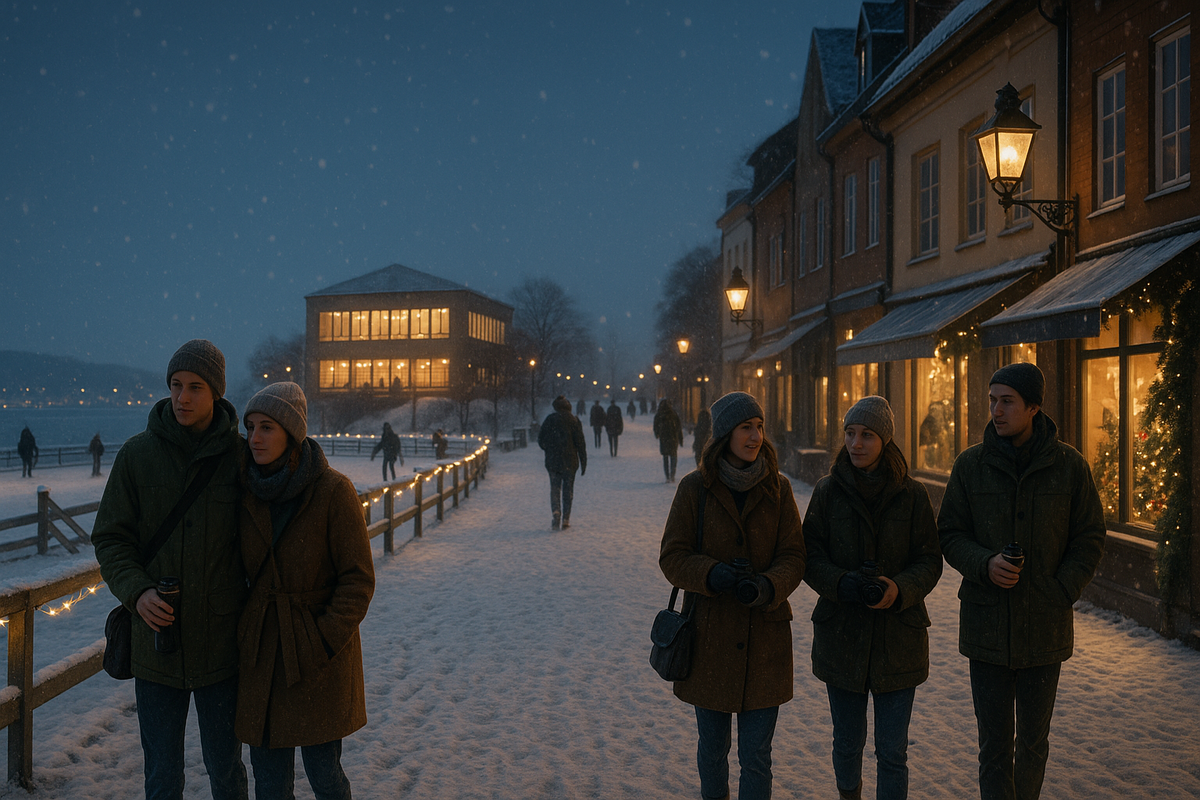
- walks along the snow-covered embankments of Helsinki, Oslo, and Stockholm;
- public spaces and libraries (remember Oodi in Helsinki);
- free viewpoints of the fjords and archipelagos;
- city parks, ice rinks, winter trails around the capitals;
- the festival of light — garlands, shop windows, lights in the squares.
Often, one or two ‘expensive’ activities (such as husky sledding and a Northern Lights tour) and well-planned accommodation are enough to make the trip feel like a holiday rather than a financial marathon.
If you live in the region, you don't have to go ‘all out’ at once. You can spread out your dreams: in winter — where to stay in Copenhagen for a couple of days, next season — Lapland, then the fjords. This way, winter in Scandinavia becomes not just one ‘ruinous project’, but a series of warm chapters in your personal northern story.
And yes, counting your budget doesn't kill the magic. It just helps you sit calmly in a café somewhere in Turku or Bergen, look at the lights and think not about the euro exchange rate, but about how beautiful the north can be when it's quiet.
Leave yourself a little breathing room in your budget, choose reasonable scenarios, and where to stay in Finland in winter will be a matter of taste, not panic in your banking app.
❓ FAQ
If you choose budget hotels or a good hostel, there are lunch buffets and supermarkets, and you don't get carried away with paid tours, the real minimum for Helsinki and a couple of nearby cities is about €700-900 per person per week, not including international flights. This includes accommodation, transport, basic meals and several museums.
Taking into account the flight or night train from Helsinki, accommodation for 5-7 nights, one husky safari and one Northern Lights tour, expect to pay between €1,200 and €1,800 per person. The closer it is to Christmas and New Year and the more activities you do, the closer you will be to the upper limit.
Most often, yes: accommodation and food in Norway are significantly more expensive, especially in Oslo and in tourist regions with fjords. But the difference is not ‘twice as much’, but rather 10–30% per day for a similar level of comfort. On the other hand, Norway often wins in terms of spectacular landscapes.
If your budget is limited, it is better to focus on Finland and not spread yourself too thin across three countries in one trip. If you want to compare the capitals, it is a good idea to add Stockholm or Copenhagen for 2-3 days by ferry or inexpensive flight, but do not turn your trip into endless travelling.
They are often comparable in price, but the night train wins because it saves a night in a hotel and is a more comfortable experience for those who don't like winter flights. Flying is faster and more convenient for a very short 3-4 day holiday.
Yes. Lunch buffets, soups of the day, supermarkets with ready-made meals and inexpensive cafés greatly reduce the bill. If you alternate between ‘expensive’ dinners and simpler days, you can get by on €25-35 per day without feeling like you're living on bread and water.
No. If you live in Finland or Norway and can afford several trips to the north, you can hunt for the aurora yourself: check the cloud forecast and leave the city far enough away from the lights. A tour is useful when you have limited time and want to maximise your chances in 1–2 nights.
On average, Helsinki and Stockholm are slightly easier on the budget than Oslo and Copenhagen, especially when it comes to accommodation. But the difference is not dramatic, and a lot depends on the dates of your trip and finding good hotels. In any case, it is worth monitoring prices in at least two cities in advance and playing around with the itinerary.
If sauna culture is important to you, Finland is the perfect destination: from public saunas in Helsinki to private mökki in the forest. You can build a completely independent route around saunas and hot tubs, combining it with winter walks and cafes, and it will not be more expensive than actively riding snowmobiles.
It is best to set aside 15-20% on top of the calculated budget. In Scandinavia, the weather, transport delays and tempting activities (such as ‘igloos with a view of the northern lights’) can arise suddenly, and this reserve will allow you to react calmly, rather than counting every euro.
It is highly recommended. Insurance that covers activities (skiing, snowmobiling, winter hiking) with good limits for medical care and repatriation is a must. Given the cost of medical services in the region, saving on insurance is rarely a wise decision.
Yes. Residents of Finland, Sweden, Norway, and Denmark often spread out their pleasures: one year — Lapland, the next — the fjords, the third — the capitals. They use night trains instead of hotels, catch discounts on flights and ferries, and combine short trips of 2-3 days. The result is a series of small but memorable winter trips instead of one super-expensive one.

0 comments
Log in to leave a comment